Loading video…
All breakouts
9.0Text-HeavyStory Open hookEducation
Hook
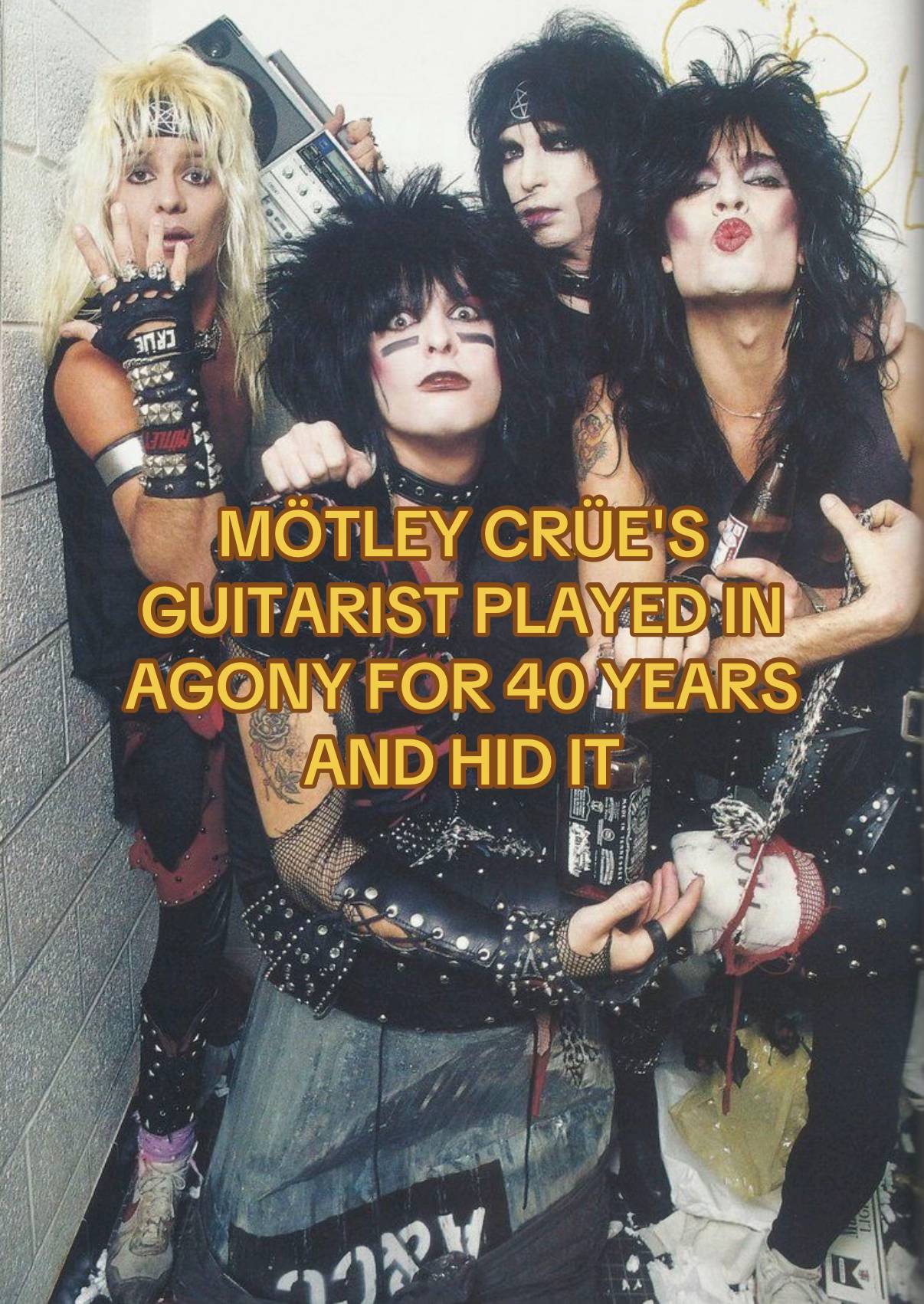
MÖTLEY CRÜE'S GUITARIST PLAYED IN AGONY FOR 40 YEARS AND HID IT.
@guitar.unlocked
2.1K followers · usually 1.7K views a post
Views
20.0K
Likes
279
Comments
1
Shares
23
Why it worked
The post taps into a deep well of fan interest by revealing a hidden, personal struggle of a beloved rockstar, combining elements of music history, personal resilience, and the human body's limitations.
Summary
This slideshow details the decades-long struggle of Mötley Crüe guitarist Mick Mars, who played through severe pain caused by ankylosing spondylitis. Despite the debilitating effects of the disease on his spine and body, Mars continued to perform arena tours for over 40 years, keeping his condition largely hidden from fans until his retirement in 2022.
Structure
- 1Introduction of Mick Mars and his hidden pain
- 2Explanation of his disease, ankylosing spondylitis
- 3Description of the physical toll and his dark humor
- 4His retirement and bandmates' praise for his courage
Product placement
Mötley Crüe (band) - ACTS - performs music, has a guitarist who played in agony. Removing it would change the topic.
Mick Mars (person) - ACTS - is the guitarist of Mötley Crüe who played in agony. Removing him would change the topic.
CRÜE (brand) - APPEARS - on a wristband, part of Mötley Crüe's branding. Removing it would not change what happens in the video.
On-screen text
MÖTLEY CRÜE'S
GUITARIST PLAYED IN
AGONY FOR 40 YEARS
AND HID IT.
mick mars co-founded
mötley crüe and played
lead guitar for over 40
years. what most fans
never knew is that he did
almost all of it in serious
physical pain, from a
disease he'd had since he
was a teenager.
it's called ankylosing
spondylitis, a form of
arthritis that slowly fuses
your spine solid. he
described the early days
like this: "my hips started
hurting so bad it felt like
someone was igniting
fireworks in my bones." he
couldn't afford a doctor,
so he just tried to will it
away.
over the decades it bent
his spine, gave him
scoliosis, and made him
three inches shorter than
he was in high school. and
he kept playing arena tours
the whole time. his own
dark joke about it: "i ended
up bent. i can always see
my guitar."
he finally retired from
touring in 2022, after 41
years. his bandmates said
he'd managed the disease
"with utmost courage and
grace, and to say enough is
enough is the ultimate act
of courage." four decades
of stadium shows, almost
nobody knowing what it
cost him.
Original caption
#guitarist #guitarplayer #musician #curiosity #rock
More from @guitar.unlocked
More breakout videos from this creator.