Loading video…
All breakouts
6.3Text-HeavyOther hookHealth
Hook
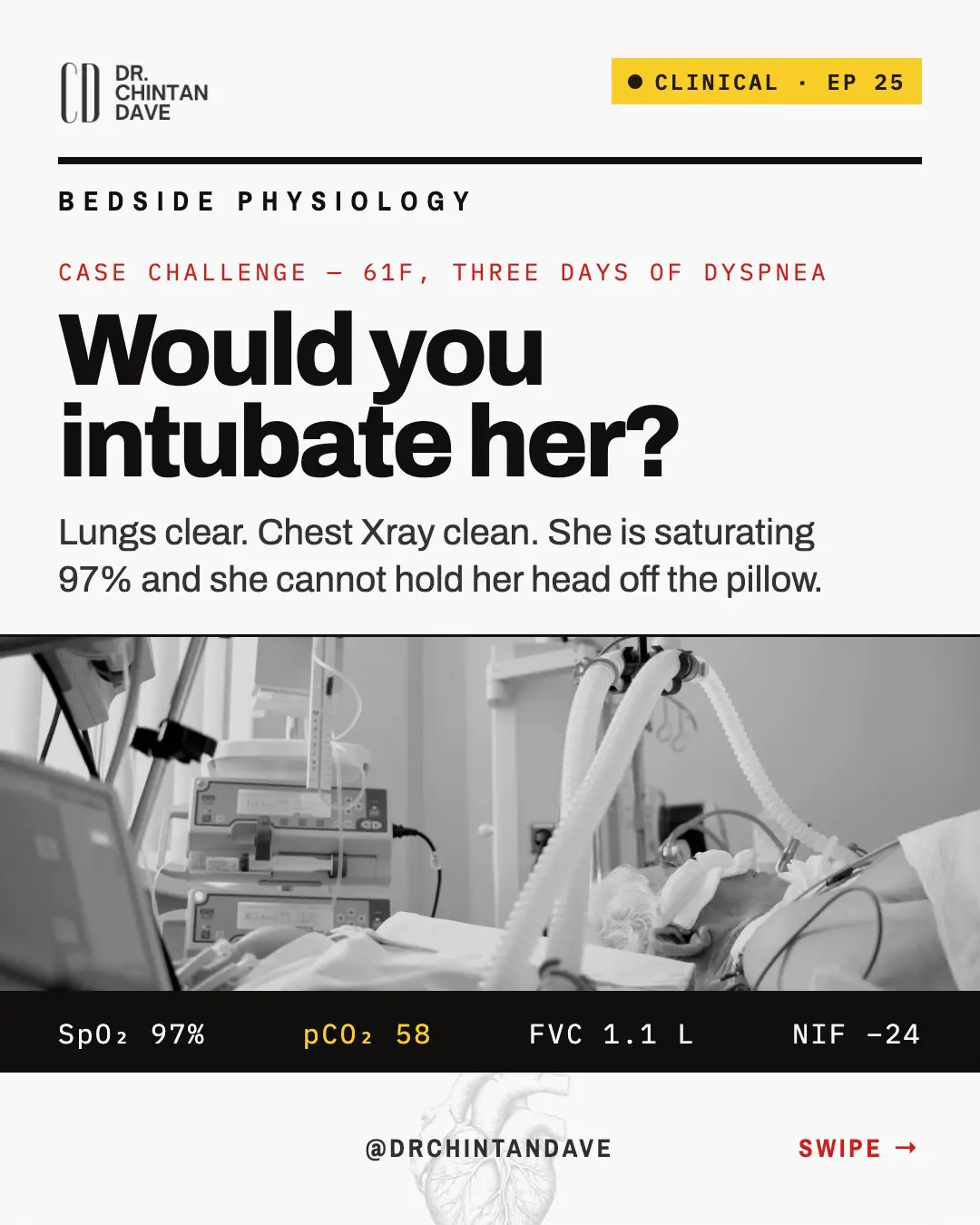
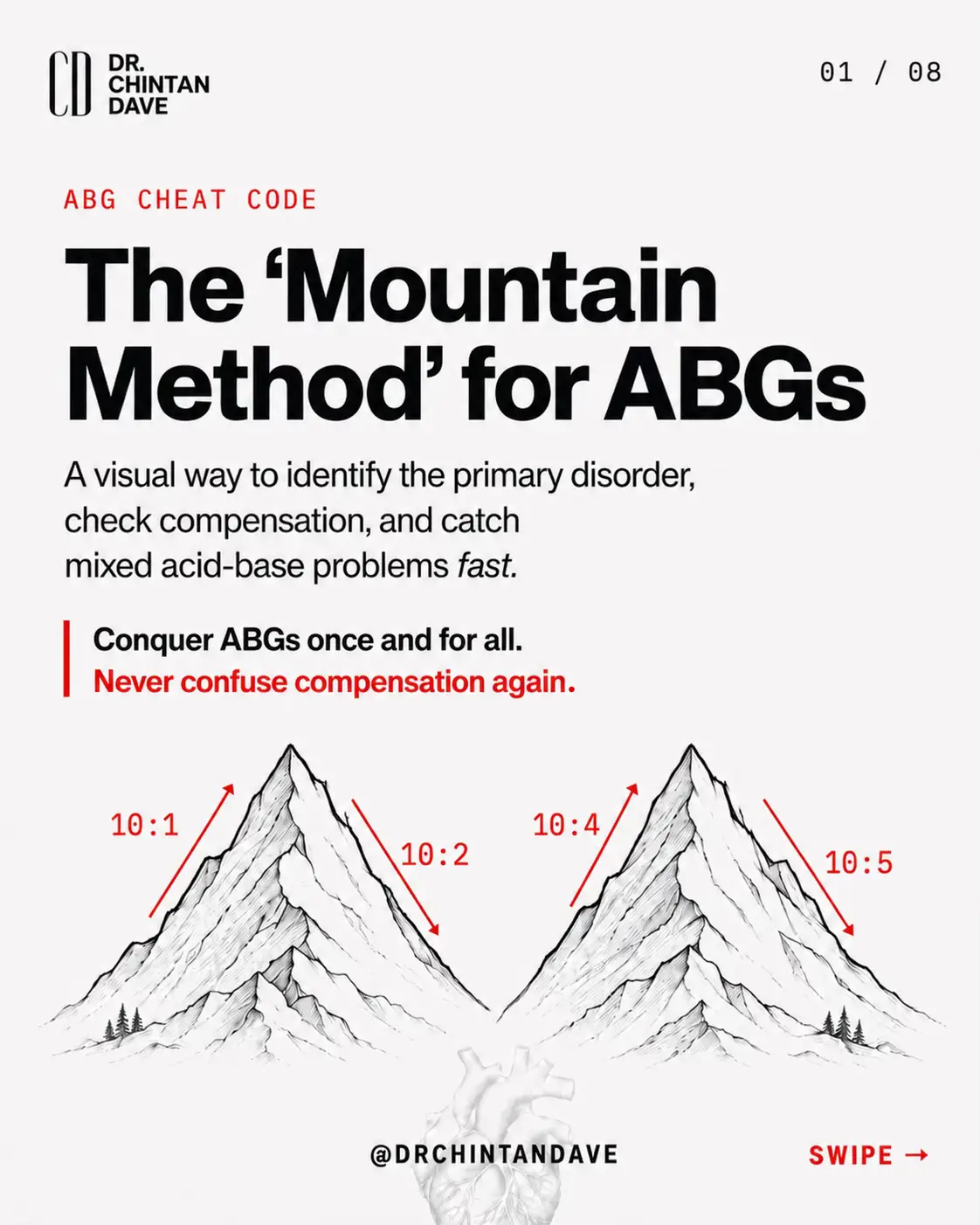
CD DR. CHINTAN DAVE CLINICAL EP 23
@drchintandave
84.8K followers · usually 4.0K views a post
Views
25.2K
Likes
758
Comments
17
Shares
45
Why it worked
The content provides valuable, actionable medical information in a clear, concise, and visually engaging format, addressing a complex topic with a logical progression of information.
Summary
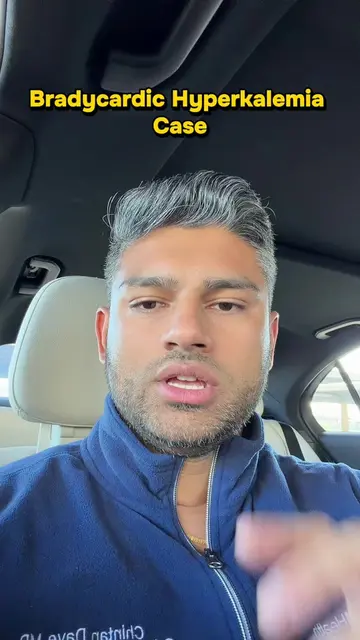
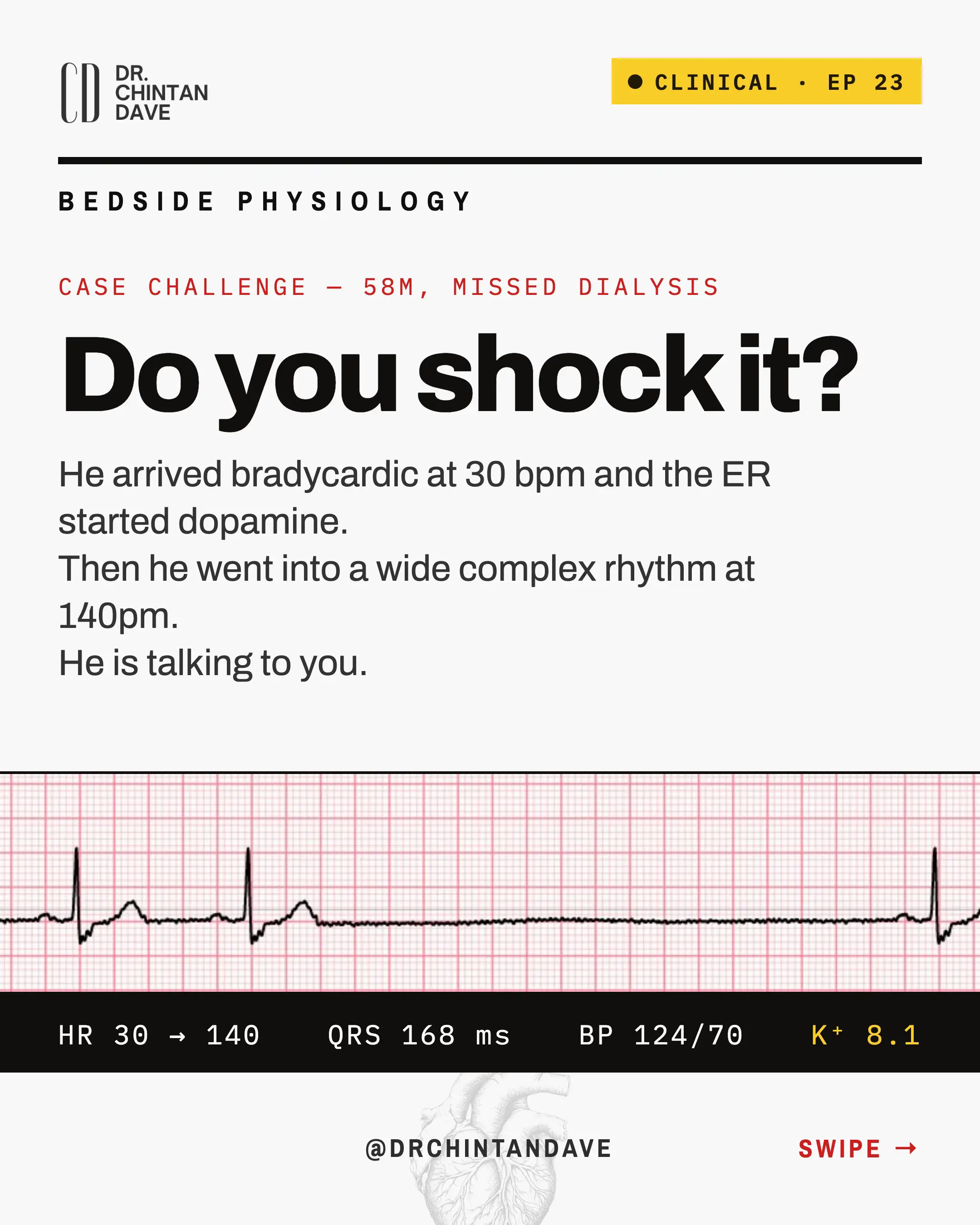
This slideshow presents a case challenge about a patient with bradycardia and a wide complex rhythm, ultimately diagnosed as hyperkalemic pseudo-VT. It details the physiology behind the condition, the key treatment principle of administering calcium, and common mistakes to avoid.
Structure
- 1Case presentation: bradycardia and wide complex rhythm
- 2Diagnosis: Hyperkalemic pseudo-VT
- 3Key principle: Calcium before anything else
- 4Physiology: The gap that makes a cell fire
- 5Treatment sequence and common errors
- 6Take-home message: Measure potassium before shocking
Product placement
CD DR. CHINTAN DAVE: This is the creator's branding, it appears on every slide. It does not act, it merely appears. Removing it would not change what happens in the video.
@DRCHINTANDAVE: This is the creator's handle, it appears on every slide. It does not act, it merely appears. Removing it would not change what happens in the video.
Call to action
FOLLOW @DRCHINTANDAVE
On-screen text
Original caption
Starting to systematically answers to my older case challenges. So make sure you are following along! Four things that didn’t fit on the slides but change what you do at the bedside: 1. Stop waiting on the central lab. A VBG or i-STAT returns a whole-blood K⁺ in 60–90 seconds; the send-out takes much longer. In a dialysis patient with a wide complex, that gap is the entire case. Know that whole-blood K⁺ runs slightly lower than serum (no clot-related platelet release), so a POC value of 7 is not reassurance — it’s an underestimate. 2. Pseudohyperkalemia is real and it is not a reason to pause. Hemolysis, tourniquet fist-clenching, extreme leukocytosis or thrombocytosis all falsely elevate the number. But when the story fits and the ECG fits, treat first and redraw simultaneously. Nobody has ever been harmed by 3g of calcium gluconate they didn’t strictly need. The reverse is not true. 3. Hypertonic saline is the forgotten rescue. In refractory hyperkalemic conduction failure — QRS still wide after repeated calcium — 3% NaCl improves conduction by increasing the driving force for the sodium current, independent of the potassium level. Highest yield if the patient is also hyponatremic. Underused, and it works. 4. If a dialysis patient arrests, give calcium empirically. Don’t wait for a potassium. Undifferentiated arrest + ESRD = hyperkalemia until proven otherwise. And extend your resuscitation — hyperkalemic arrests have documented neurologically intact survival after prolonged CPR once the potassium comes down. This is one of the arrests worth being stubborn about, and one of the few where ECMO/ECPR has a genuinely reversible target. #criticalcare #internalmedicine #icu #meded #doctor
More from @drchintandave
More breakout videos from this creator.