Loading video…
All breakouts
36.6Talking HeadStory Open hookEducation
Hook
Cutting a kid off financially at 18 actually makes the least sense coming from a first gen student trying to escape generations of poverty
@journeyshouse
8.4K followers · usually 8.0K views a post
Views
235.4K
Likes
32.1K
Comments
4.2K
Shares
430
View velocity
+216.0K views over 24.2d · ~8.9K/day · 7 observations
Why it worked
The video resonates with a specific audience by addressing the financial and emotional struggles of first-generation students and young adults navigating independence, tapping into a shared experience of overcoming generational poverty.
Summary
The speaker argues that cutting off children financially at 18 is counterproductive, especially for first-generation students trying to escape poverty. They highlight the significant expenses faced by young adults, such as rent, utilities, and education, which are compounded by the stress of academic success needed to break generational cycles.
Structure
- 1Financial independence at 18 is illogical for first-gen students escaping poverty.
- 2Young adults face major expenses like rent, utilities, and education.
- 3Adding academic stress to these financial burdens is detrimental.
- 4Supporting children financially, even after 18, is crucial for breaking generational cycles.
On-screen text
Cutting a kid off financially at 18 actually makes the least sense coming from a first gen student trying to escape generations of poverty
Transcript
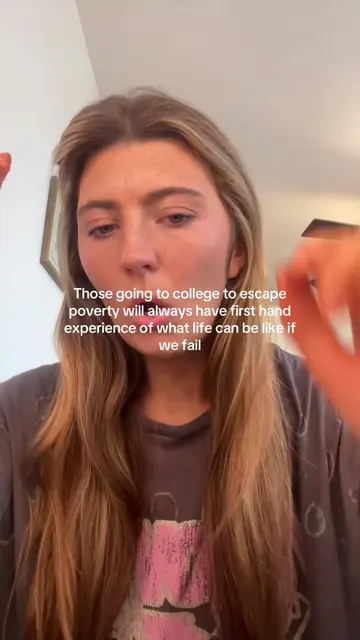
Cutting a kid off financially at 18 actually makes the least sense coming from a first gen student trying to escape generations of poverty. As this society when are we gonna stop acting like cutting a kid off at 18 makes sense. This is when life gets the most expensive. Taking on rent, utilities, college, trade school. It's a lot of people's first time taking on major bills. Don't get me started on vehicles, vehicle maintenance, car notes, car insurance. But if they're in school for something, add 10 times this stress to that because now they're juggling staying alive and surviving and also trying to excel in school so that they can break generational cycles. You could say, oh, they're growing up, they're still your kid. Just because they're not a kid, they're still your kid. Just because they're not a kid, they're still your kid.
Original caption
Just because they ARENT a kid, they are still YOUR kid… #firstgen #college #collegestudent #tradeschool
More from @journeyshouse
More breakout videos from this creator.