Hook
More breakout videos from this creator.
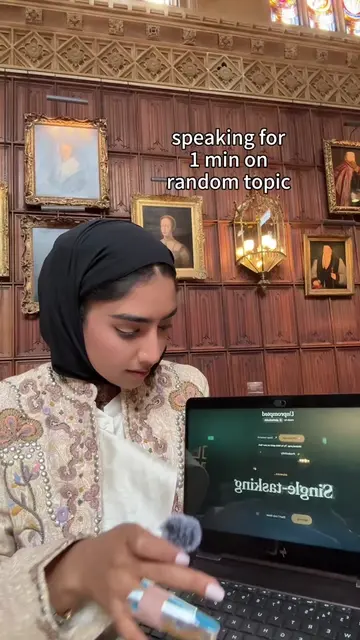
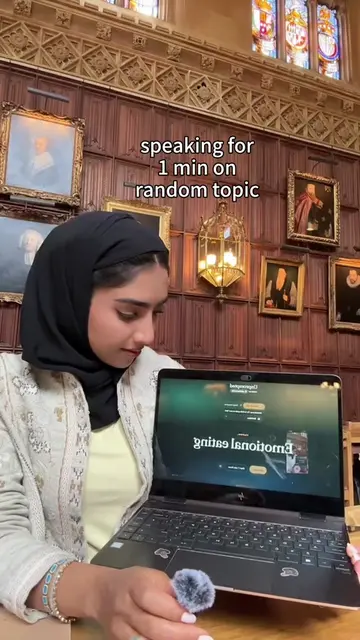
A lot of you have been asking, speaking for 1 min on random topic. How I learn almost anything in 5 minutes. I research these random topics and just 5 minutes. One tab open. No AI and so as a scientist and Cambridge student. This is the exact method I'm using. Now, remember, the whole point of this challenge is to remove as much unnecessary stimulation as possible. Why I have only one tab open and won't give ourselves 5 minutes. Trust me, I'm actually someone notorious for having over 40 to 70 tabs open at any given time. We constantly switch between tabs, tools, and sources. It actually fragments your attention rather than allowing you to properly engage with what you're reading. This. And the reason this is a no AI challenge is because we're slowly outsourcing one of the most valuable parts of learning, which is figuring things out ourselves. I think that so much of learning happens during the research itself. You read across different sources, decide what's relevant, decipher what something means, you then synthesize that information and then reconstruct it in your own words. So it makes sense to you. And that cognitive effort is part of learning. And when we immediately resort to AI, it can do a lot of that processing for us. And the fact that there were hundreds of DMs and comments asking how my methodology made me realize that perhaps this is a skill we need to actively exercise again. The goal isn't to never use AI, but to make sure we can still think without it. Remember, the topics that I usually get are relatively easy to understand and hence why it's doable in 5 minutes. If you need more time to decipher the information, that's absolutely perfect. It's not competition. This is for you to practice getting better at absorbing information, articulate, retain, and then articulate information in your own words. Because if I don't understand the information, everything I research afterwards is going to be built upon foundations that are not secure. Second, explore. This is where I ask myself, what different credible sources, I'll prioritize reputable publications, universities, journals, and academic sources. For me, reading multiple sources helps me to contextualize information better since I'm a scientist and I'm very familiar with reading research fast. But if you're not able to do so, please don't read a journal from beginning, that's not how you're supposed to be reading it, at least not for this task. Start with the abstract. It will give you the synopsis of the paper and then look at the introduction because normally it gives you an idea about the background and context to understand the concept that the research is investigating, which you're obviously interested, which is why you're reading the journal. Then from there, I ask myself, okay, how does this work? Why is it important? And what evidence supports it? So I'll be looking for things like contextualize statistics. Then finally, I connect. I think this is probably the most important part for actually remembering what you've learned. Ask myself, what does this mean for me? Can I relate it to something that I've experienced? Is there something practical that I can take away from it? Because I want to connect information that I want information to something that I already understand. My presentation which follows the same structure, define, explore, connect. And reflecting on this, this is very similar to how I've studied throughout my teens, 80s and 90s. You know, if you study in the UK, you'll know that our grading system is very different to that in the states and achieving a higher, actually challenging. If you want me to break down exactly how I've used that method to study for exams, let me know in the comments. And if you want this video in a document format, let me know and I can share the framework. I hope that helps.