Loading video…
The creator

@henryfudgeofficial
Henry Fudge · 167.1K followers · 2.2M likes
Usual views
106.9K
Outliers
8
Viral hits
15
Outliers and viral hits: their videos on Overshot, all time.
We didn’t find a product being promoted in this video. Its hook, format and structure below still show why it took off.
Browse products winning on TikTokThe video likely resonated due to its critical and analytical approach to a significant political policy, presented in a direct and engaging manner. The use of specific data points and the speaker's confident, opinionated delivery likely contributed to its shareability and impact.
The video critiques Reform UK's "Making Welfare Work" plan, highlighting alleged flaws in their financial assumptions and proposed savings. The speaker argues that the plan relies on dubious economics and misrepresents data, particularly concerning the impact of sanctions and changes to inflation measures. The video concludes that the plan's savings are largely based on cutting benefits rather than genuine efficiency.
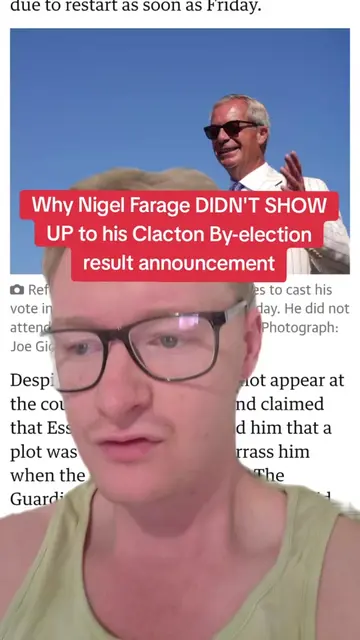
Reform UK have published their welfare plan, “Making Welfare Work”: 48 pages, £50bn a year in savings, and to be fair the arithmetic checks out this time. The assumptions are another matter. Sanctions and fit-for-work assessments the NAO found cost more than they save, booked as savings. Council work placements at £1.50 an hour, made legal by one sentence. A £500m contingency that is short by three to four times against the plan’s own unit costs. And a one-line change to how inflation is measured for benefits, CPI minus 0.6, that does most of the work while the plan indexes its own costs to CPIH. Two thermometers, one document. Reform UK welfare plan explained: Universal Credit, PIP, DWP sanctions, fraud and error, the Withdrawal Agreement, OBR figures, and how to read a costing. The IFS only bothered to do a 317 word cover so I thought I’d give you a chunky video on it. #reformuk #ukpolitics #economics #ukpolicy #uknews
Outliers and viral hits: their videos on Overshot, all time.
Reform UK
Introduction of Reform UK's welfare plan and initial skepticism about its figures.
Critique of previous budget reviews and the alleged mathematical inaccuracies of Nigel.
Analysis of Reform UK's proposed savings, focusing on fraud reduction and sanctions.
Discussion of the cost-effectiveness of sanctions and fit-for-work assessments.
Examination of the proposed changes to benefit calculations, including inflation adjustments and substitution factors.
Critique of the plan's assumptions regarding people working for the state and the handling of inflation measures.
Conclusion that the plan's savings are based on benefit cuts and flawed economic assumptions.
Reform UK: a political party that proposes policies and budgets. It ACTS as the subject of the video's analysis. Removing it would change what happens in the video. Nigel: a person, likely a politician, whose financial calculations are being discussed. He ACTS as the subject of the video's critique. Removing him would change what happens in the video. National Audit Office (NAO): an independent body that audits government spending. It ACTS as a source of information and analysis. Removing it would change what happens in the video. Department of Work and Pensions (DWP): a government department responsible for welfare and pensions. It ACTS as the entity whose spending is being analyzed. Removing it would change what happens in the video.

Playing this video’s own audio, so you’ll hear the creator over the sound.