Loading video…
All breakouts
156AnimationStory Open hookEducation
Hook
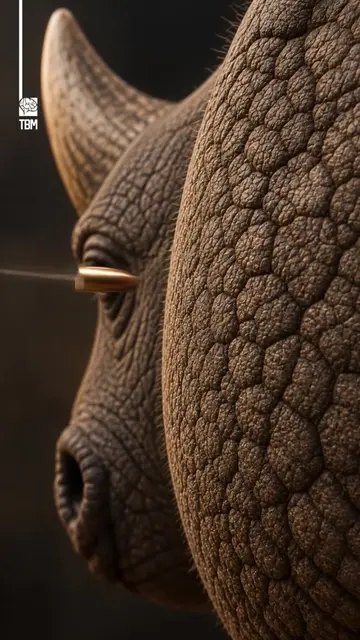
When you fire a 9 millimeter handgun
@thebrainmaze
1.1M followers · usually 16.5K views a post
Views
1.6M
Likes
18.1K
Comments
643
Shares
1.2K
Why it worked
The video effectively uses animation and clear data visualization to explain a complex physics concept in an engaging way. The use of relatable scenarios and a clear warning at the end likely contributed to its shareability.
Summary
This video explains the physics of a bullet fired into the air, detailing its velocity and kinetic energy as it rises and falls. It highlights how gravity and air resistance affect the bullet's trajectory and speed, ultimately warning that a falling bullet can still be fatal.
Structure
- 1Bullet fired into the air
- 2Bullet's ascent and energy decrease
- 3Bullet reaches peak height with zero velocity
- 4Bullet's descent and energy increase
- 5Effect of air resistance on falling speed
- 6Bullet's potential to cause fatal injury
On-screen text
When you fire a 9 millimeter handgun
straight into the air,
its bullet can leave the barrel at around 350
m/s,
carrying about 500 joules of kinetic energy.
As it rises, gravity and air resistance slow it down,
so its kinetic energy keeps decreasing.
At its highest point,
the bullet briefly reaches 0
m/s,
meaning its kinetic energy is 0 joules.
But because it is high above the ground,
it now stores gravitational potential energy.
Gravity then accelerates the bullet downward,
converting that potential energy
back into kinetic energy.
Air resistance limits its falling speed,
typically to around 50 to 70 meters per second.
Ignoring air resistance, gravity accelerates objects
at 9.81 meters per second squared,
so after one second
the bullet would be moving about 10 meters per second,
after two seconds about 20
meters per second,
and after 3 seconds about 30 meters per second.
But in reality, as the bullet
gets faster
air resistance gets stronger,
so each second adds less speed
until it approaches its terminal velocity.
At around 50 to 70 meters per second,
a falling bullet can still cause a fatal injury
if it strikes someone.
Original caption
Can a Falling Bullet Be Fatal? - What really happens when a 9 mm bullet is fired straight into the air—and how dangerous is it when it comes back down? Discover the physics behind its rise, fall, speed, and energy. #bullet#gravity#fypシ゚viral
More from @thebrainmaze
More breakout videos from this creator.