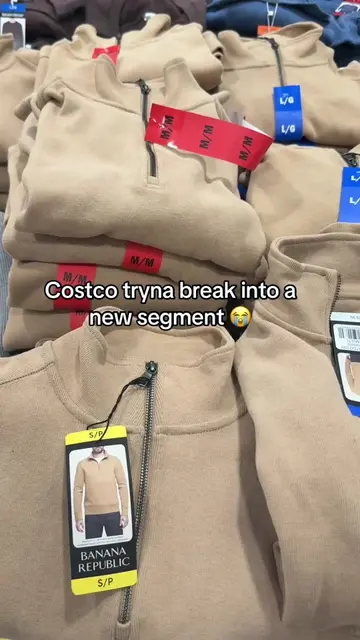
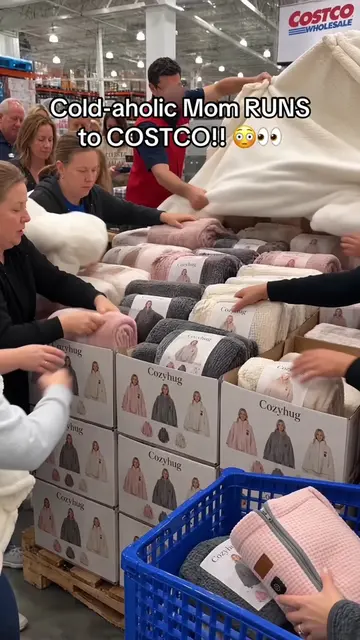
The coat you are going to want in January is sitting on a Costco pallet right now and it will be gone in November. That is not a sales line. It is how the buying calendar works and it is the single most expensive thing most members do not understand about that clothing floor. Costco buys winter apparel once. The quantity is negotiated months ahead at a fixed number and there is no second shipment. The pallets land in August and September. They empty through October and November. By the time the weather is cold enough that you actually think about a coat, the good ones have been gone for weeks and the floor space has been given to Christmas. Which means the entire warehouse clothing floor runs about two months ahead of your body. 10 items on that floor right now that people will wish they had bought. And before number five, I will tell you exactly when each wave disappears because once you know the calendar, you never miss it again. Number 10, Kirkland Signature extra fine merino wool blend crew socks, four pairs, $16.99. Start with the smallest thing on the list because it is the one people replace at the worst possible moment. Extra fine merino is a grade, not a marketing phrase. It means the fiber diameter sits at the fine end of the merino range which is what makes wool wearable against skin without itch. Above roughly 23 microns, wool itches regardless of what the price tag says. The blend matters as much as the grade. Merino below 40% behaves like a synthetic sock with a wool claim attached because it holds moisture instead of moving it and a damp sock inside a boot is how you get cold feet at 35 degrees. Above 60%, it wears through at the heel because wool alone has almost no abrasion resistance. Smartwool's comparable sock retails at approximately $25 per pair. This is four pairs for under $17 when it goes. Socks are the last winter category to clear, usually into December, which makes this the one item on the list you can safely delay. The honest comparison is worth making though because Smartwool is charging for something real. Both Smartwool and Darn Tough knit a denser stitch at the heel and toe and both back the sock with a lifetime guarantee. Kirkland does neither. Expect a hole at the heel within roughly 18 months of weekly winter wear against three years or a free replacement for the branded pair. At just over $4 a pair against $25, that trade is not close. But it is a trade and you should know you are making it. Number nine, 32 Degrees heat quilted vest, around $10. A quilted vest is the most efficient piece of insulation anybody owns and almost nobody understands why. Your body prioritizes heat at the core. Insulate the core and the blood reaching your hands and feet is warmer which is why a vest over a long sleeve is frequently warmer in practice than a jacket alone. It also leaves your arms free which matters when you are driving or carrying. The specification is the baffle spacing. Tighter quilting holds the fill in place. Wider quilting looks more expensive and lets the fill migrate to the bottom of each panel over a couple of seasons which leaves you with a cold chest and a heavy hem. Comparable quilted vests from the outdoor brands run $79 to $149 when it goes. Vests move fast in October because they are an impulse price. Expect thin stock by the end of the month and there is a layering argument that makes this the highest leverage $10 on the entire floor. A vest under a coat adds core insulation without adding sleeve bulk which means your existing coat suddenly works in colder weather than it was built for. You are not buying a garment so much as extending the range of everything already in the wardrobe. That is why people who understand layering own two of these and people who do not own none. Number eight, Kirkland Signature women's ribbed crew neck, $14.99. The specification you must check is on the tag and at $15 it decides everything. A cotton or cotton blend rib is a genuinely good buy and an acrylic rib photographs identically and pills at the underarm within roughly 20 wears. The rib itself is worth understanding. A ribbed knit alternates raised and recessed columns which uses more yarn per square inch than a flat knit and gives lateral stretch with recovery. That is why a rib holds shape at the cuff and the hem where a flat knit goes slack. The advantage is real in cotton. In acrylic it is mostly decorative. When it goes, Kirkland basics restock more reliably than branded lots so this is lower risk. The colors are the constraint rather than the item.