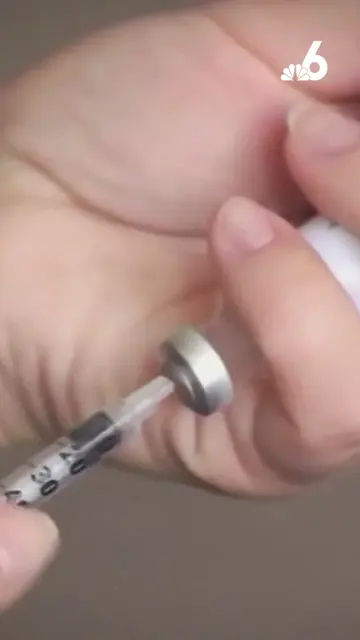
About 12% of Americans are now taking the blockbuster set of weight-loss medications known as GLP-1s. While their popularity continues to skyrocket, new concerns have emerged around the societal impacts these drugs are having, especially around body image. When Gabby Coro became a mom in 2021, the joy of having her son Charlie was soon overshadowed by what came next. It was very hard to shed the pounds. I had gone through pretty severe postpartum depression that lasted roughly three years and nothing was really working. So some of the side effects include weight gain or like really hard to lose weight. The 35-year-old college professor lives in Miami with her husband Raul. She says despite repeated efforts, she struggled to lose about 30 pounds from her pregnancy. I just didn't like how I would look in pictures. I didn't want any pictures taken of me during this time. My husband can attest he had a family member ask him if we, you know, were separated or divorced. He's like, I don't see Gabby in any of the pictures with you and our, you know, your son. You know, and that's how I was just like, don't take a picture of me. I don't want to be seen. But late last year, she was prescribed a GLP-1. And I took my first injection after Christmas and my birthday so I could have birthday cake and enjoy myself. With ads fronted by celebrities flooding airwaves and social media feeds, the health benefits beyond weight loss from GLP-1s have also fueled their growing popularity. Besides treating diabetes, which they were originally developed for, the drugs are proving to lower the risk of heart attacks and stroke and improve a range of cognitive and behavioral health outcomes, reducing seizures, sleep apnea, and arthritis. But for Gabby Coro, who after just three months on a GLP-1 lost nearly all her post-pregnancy weight, the decision to take them felt fraught. I felt like I was almost a traitor to everything I stood for in regards to, you know, body positivity. The only beach body is a body on the beach. Those slogans that we say and I do believe and here I am taking the meds and I was just, I felt really shameful about it. Since 2019, the number of overweight adults in the US prescribed a GLP-1 has skyrocketed by nearly 600%. These drugs are marketed as a way to change your body and feel better about yourself. And I think they're being oversold somewhat. Charlotte Markey is a clinical health psychologist at Rutgers University and the author of several books on body image. Body image is linked with depression, anxiety, substance use disorders. When people don't feel comfortable in their own skin, then the consequences are really vast. And it's no wonder why advertisements that suggest you can take a medication to fix your body image are compelling. But what we don't have is any data that actually shows that taking these weight loss medications will improve body image. She also worries GLP-1s may fix one issue while creating others. And I do see in my practice that there are people who have been prescribed these drugs and they're not eating enough and they are essentially developing eating disorders as a result of the medication. She says it wasn't that long ago that bodies of all sizes were gaining new acceptance. We really saw people embracing body diversity, body acceptance, and enjoying seeing themselves in the images around them. And then weight loss medications came on the scene and there was less diversity. There's also research that larger body people who use GLP-1s to lose weight are facing new stigmas. A study published earlier this year found they're viewed negatively for taking a shortcut. Meanwhile, another study found that women's chances of being hired and finding a spouse increase after more than a year and a half on the medication. So I went from a 3X, 3XL t-shirt to a medium. I'm wearing a medium today. And it's weird to get these compliments about how great you're looking and you know that you're very sick inside. 54-year-old Ruth McClelland-Nugent started taking a GLP-1 last year to address diabetes. And for that, the medication has worked. She also lost roughly 100 pounds. But the Georgia resident says it's also led to a cascade of health problems. Certainly having a lower blood pressure, a lower weight, and a lower A1C, those are very good. But I'm not I'm not able to be very active. I'm not able to control my emotions. I mean I I have this this hunger thing going on. I'm weak. Um I'm having trouble, you know, I get up and down the stairs. I I'm having trouble getting back you used to walking. Even though McClelland-Nugent was only on a GLP-1 for seven weeks and got off them in November, the side effects she says have persisted. And now she has to take a bag full of medications to address a variety of symptoms that she traces back to her time on GLP-1s. These are two different versions of what makes me able to eat. She initially was diagnosed with gastroparesis, a rare side effect that impacts digestion and can lead to poor appetite and nutrition. When you lose muscle there, it it really messes with your balance. So I don't She also says she suffered rapid muscle loss and occasionally needs to use a cane. My goal was to reduce my blood sugar, not necessarily to lose weight. So this has all been really weird and it wasn't expected. I remember being 350 pounds going on an airplane and when I asked for a seatbelt extender, um the, you know, the flight attendant uh turned around and said, we need a hog strap. Dr. Tro Kalayjian, who calls himself a contrarian to the medical establishment, can empathize with the patients he sees at his obesity medicine practice outside New York City. I couldn't fit on rides at carnivals with my kids. I couldn't experience life. I couldn't go clothes shopping. I never felt comfortable in my skin. 10 years ago, Dr. Kalayjian began a strict ketogenic diet and exercise routine. He lost 150 pounds, weight he's been able to keep off, he says, without the use of GLP-1s. I think these drugs are amazing. They're an amazing tool for people's diabetes and obesity, but without a holistic approach, we are literally setting up people to fail. Our diets have not meaningfully changed to accommodate these medications. We didn't all of a sudden start eating nutrient-replete diets. We didn't all start exercising, meaning we're not mitigating the side effects that we know these cause. And while he does prescribe them to some of his patients, he also touts a GLP-1 off-ramp on his website for people suffering physical or mental side effects. I think the biggest harm that docs can do right now is take somebody who's struggled with obesity their entire life, doesn't know how to eat food to actually nourish themselves, is nutrient-depleted, has never had their psychological or emotional issues evaluated, and just give them a GLP-1 and have them eat less. I think it's a recipe for disaster. For Gabby Coro, back in Miami, it's been a recipe for success. She's comfortable seeing herself in photos again, even though she still feels conflicted. It works. So I I would say I'm so happy I did it. I really am. Would you be willing to go back on it if you needed to? I would probably feel really guilty if I did. Why would you feel guilty? I would feel like I was a failure that it's like, well, you didn't have enough self-discipline, self-control, you lost that weight. I've always kind of had an issue with my appearance and I don't think I'm alone in that. I think most people would see something they would like to change. For the PBS NewsHour, I'm Stephanie Sy.