The video provides a curated list of 10 trending digital products for 2025, tapping into the growing market for passive income and digital entrepreneurship. By showcasing a variety of popular and in-demand items, it appeals to a broad audience looking for monetization opportunities. The clear call to action to use Raket.ph, a platform offering free listing and sign-up, further lowers the barrier to entry for aspiring sellers.
Summary
The video lists 10 trending digital products for 2025, including calendar templates, planners, social media templates, PowerPoint templates, AI/ChatGPT prompts, digital artwork, Lightroom presets, and interactive worksheets. It highlights their market demand and potential for creators to sell them on platforms like Raket.ph.
Structure
1Introduction to trending digital products for 2025
2Digital/Printable 2025 Calendar Templates
3Printable Planners
4Social Media Templates
5PowerPoint Presentation Templates
6
Original caption
10 Digital Products that will be trending in 2025 based on market trends! 💰📈 #raketph #digitalproducts #raketips #fyp #digitalproductsforbeginners #digitalmarketing #digitalproductstosell #passiveincome #marketingtips
More from @raket.ph
More breakout videos from this creator.
AI & ChatGPT Prompts
7Digital Artwork
8Lightroom Presets
9Interactive Worksheets
10Call to action to sell on Raket.ph
Product placement
The video showcases various digital products available on Raket.ph, including calendar templates, planners, social media templates, PowerPoint templates, AI/ChatGPT prompts, digital artwork, Lightroom presets, and interactive worksheets. The creator's bio link directs to Raket.ph, which is presented as the platform to sell these products.
Call to action
You can sell these on Raket.ph. Free listing and free sign up.
On-screen text
1. Digital/Printable 2025 Calendar Templates
2. Printable Planners
3. Digital Planners
4. Excel Budget Templates
5. Social Media Templates
6. Powerpoint Presentation Templates
7. AI & ChatGPT Prompts
8. Digital Artwork
9. Lightroom Presets
10. Interactive Worksheets
www.raket.ph 🚀
Transcript
This year, 2025, several digital products are expected to be on trend. Based on current statistics and market trends, here are 10 digital products that you can consider. Number one are digital or printable 2025 calendar templates. Attractive and customizable calendar templates or practical products that attract buyers. especially na bagong taon, very in demand tong calendar templates. Next, our printable planners. These remain highly popular with an average of over 2 million monthly views. You can create plan for fitness, study, daily organization, meal planners and more. These are popular and many are wanting to start the year right planning their homes. Besides, planners, planners, Social media templates. So social media templates like this designed for platforms like Facebook, Instagram and TikTok or in demand. Social media managers can avail these to save time and effort for their posts. Next our PowerPoint presentation templates. Since we're PowerPoint presentation templates. Since we're PowerPoint presentation templates for added convenience students. You can create basic power point templates, two interactive and themed templates. You can also sell AI and chat GPT prompts. daily big thing AI tools. You can sell prompt kits that can help users effectively utilize these AI tools. Please. Next, digital artwork. It's includes various art forms that can be printed by buyers. the whole chat emotes, uh CB characters and many more. Then, you can also sell light room presets. If you are a photographer or editor, you can also sell presets. These presets are essential for those looking to enhance their photography, especially on social media. Very high in demand in them. Lastly, interactive worksheets. These are sought after by preschool teachers and parents for young children. They keep children engaged while helping them learn. to pwede niyo sa rocket.ph.You are analysing a TikTok video that measurably outperformed its
creator's own baseline, for a swipe file used by founders studying how other
people MARKET their products.
## Is it promoting something?
Two different mistakes to avoid, and the second is the costly one.
FIRST: talking about an industry is not promoting a product.
- "Here's how I built my SaaS in a weekend" -> not promotional
- "Top 5 tools to start a SaaS business" -> not promotional (listicle, no one product)
- "I'll teach you to start a SaaS business" -> promotional, course_info
- A screen demo of Invideo -> promotional, saas > ai_tool
- A screen demo of Shophunter -> promotional, saas > ecommerce_software
SECOND, and more important: the best-performing promotions do not look like
promotions. Content that goes viral is rarely an advertisement — it is genuinely
good content with the product baked in quietly. Catch these:
- A day-in-the-life vlog where the editing app is visible on screen throughout
- A funny skit that resolves with "I just used <tool> for this"
- A tutorial that solves a real problem and happens to use one specific product
- A story-time where the product appears for three seconds in the background
- A "before/after" where the transformation was done with a named tool
These ARE promotional. A quiet sell is still a sell. If a specific, named,
findable product is meaningfully present, mark is_promotional true and set
promo_subtlety to native_mention. Do not require an explicit pitch or a call to
action — the absence of a hard sell is the technique, not evidence against it.
The line to hold: a product must be identifiable and findable. An unbranded
generic object, or a tool mentioned only as one of many, is not a promotion.
## Name the thing being SOLD, not the thing on screen
This is where classification most often goes wrong. Ask what the viewer is being
sold, not what happens to be visible:
- A store doing $50k/mo that runs on Shopify -> the STORE is the product.
Shopify is substrate. Do not name Shopify.
- Someone using a TikTok built-in feature -> that is the platform we are on,
not a product being sold. product_role: substrate.
- "Link in bio" pointing at linktr.ee / beacons.ai / stan.store -> those are
link containers. The product is whatever the container leads to; if you
cannot tell what that is, say "none" rather than naming the container.
- A vlog edited in CapCut, mentioned once -> incidental, not the subject.
- A screen demo of Invideo -> Invideo IS the subject. Name it.
If the only nameable thing is a hosting platform, marketplace, social network or
link aggregator, the honest answer is product_role: substrate and
promoted_product: "none". A generic category ("an AI tool", "a CRM") is also not
a product name — say "none".
## Everything else
Be concrete. Quote the hook exactly as spoken or displayed — never paraphrase.
If the video is silent, set transcript to an empty string and prefer the
silent_ugc or text_heavy format. Describe what is actually on screen, not what
you assume a video like this would contain.
## Context
Caption: 10 Digital Products that will be trending in 2025 based on market trends! 💰📈 #raketph #digitalproducts #raketips #fyp #digitalproductsforbeginners #digitalmarketing #digitalproductstosell #passiveincome #marketingtips
Creator's bio link: www.raket.ph (page title: "Do what you love. Get paid for it. 🚀")
If that bio link is the product promoted here, use it for promoted_product_url and set bio_link_is_product true. Creators often promote their own product without ever saying the url aloud. But a link aggregator (linktr.ee, beacons.ai) or an unrelated store is NOT the product.

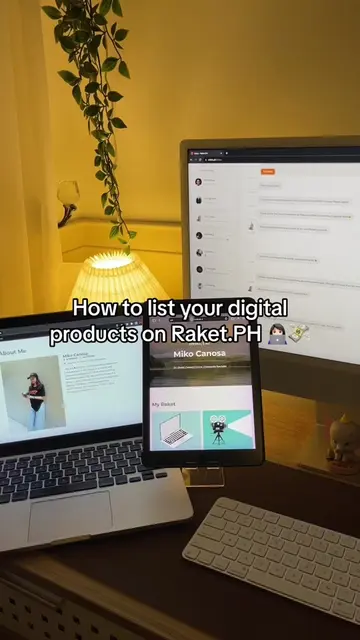
![💡 [Tutorial] - Here's a trick on how to add a perspective effect to your images](https://tiktokspy.sfo3.digitaloceanspaces.com/covers/7424411375801224455.jpg)


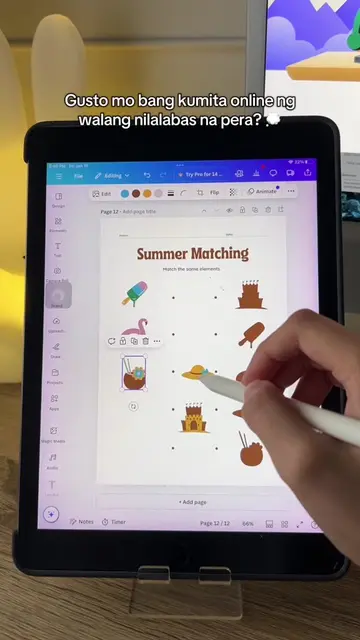
![[Tutorial] Here’s how to create a digital scrapbook on Canva! #raketph #fyp #pa](https://tiktokspy.sfo3.digitaloceanspaces.com/covers/7463408608244501778.jpg)