The video offers a clear, actionable, and structured plan for aspiring Amazon FBA sellers, breaking down a complex goal into manageable weekly steps. This provides a sense of direction and reduces overwhelm, making the goal seem achievable.
Summary
This video provides a six-week roadmap for new Amazon FBA sellers aiming to reach $10,000 in monthly sales. It outlines key tasks for each week, including setting up accounts, sourcing profitable inventory, managing sales, and reinvesting in products.
Structure
1Week 1: Foundation setup (LLC, EIN, resale certificate)
2Week 2: Account setup and sourcing habits
3Week 3: First orders, prepping, and shipping inventory
4Week 4: Monitoring sales, repricing, and continued sourcing
5Week 5: Re-investing in profitable ASINs and using a repricer
6Week 6: Achieving $10k/month through consistent effort
Product placement
Original caption
What to do your first 6 weeks as an Amazon FBA seller #amazonfba #sellonamazon #realityofamazon #amazonwhosale #amazonforbeginners
More from @davidsmithfba
More breakout videos from this creator.
Amazon FBA: acts - it is the platform where the seller operates and sells products. Removing it would change the entire premise of the video. UPS: acts - it is mentioned as a shipping provider for Amazon FBA sellers. Removing it would not change the video's premise, but would remove a detail about shipping.
On-screen text
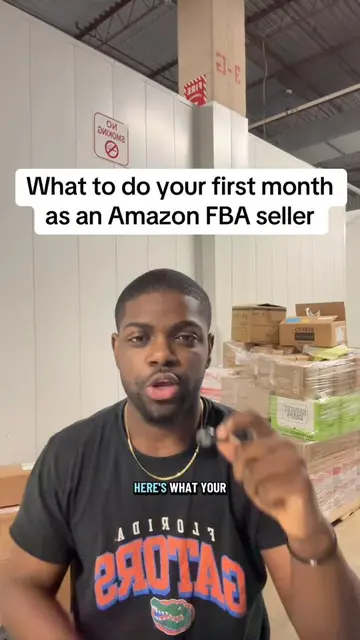
What to do your first 6 weeks
as an Amazon FBA seller
(Roadmap to 10k/mo)
Transcript
Are you feeling lost as a brand new Amazon seller and have no idea what to do? Here is a six-week guide, a step-by-step on everything that you have to do in order to hit your first $10,000 on Amazon. Week one is going to be all about setting up the foundation. So getting your LLC, EIN, resale certificate. Now, although you don't need these things to start selling on Amazon, it's a lot easier that you have it going into it, then trying to add it on to your account later on. You're going to get the tools Seller Amp and Keepa because we need them to find profitable inventory. Note here, you can get $6 by 4 labels for free through UPS if you order through a business account. Realistically, by week two, you should have your Amazon account set up because it does take a few days for the verification process. And you should also have your business banking account set up as well. Still in week two, you're going to start understanding how to find profitable inventory. Number one, go through all of my videos on this page and look at all of my Keepa videos to learn how to source for profitable auto ungated inventory. Within the second week, you're going to build the habit of sourcing. You need to source every single day. And you also have to give yourself some grace because this is a brand new skill that you're learning. So make thousands of dollars every single month. No one said it was going to be easy, and it's not going to be easy. The more that you source, the better that you get over time. This is not something that you can pick up within three days and take off with. You need time in the game. You need time and sourcing. By week three, you should have your first couple of orders coming through. You should be prepping that inventory and shipping it off to Amazon. For a lot of people, by week three, they also start seeing their first sales as well, but this process is really dependent on how fast you can execute and move. By the third week, you're also going to build out an entire spreadsheet of different ASINs or listings that you're finding profitable and even listings that you can't even find profitable or listings that are gated for you. If they're close enough, they should be going on that sheet because later on the line, you'll be able to buy those same listings to make money. By week four, Amazon should have received your first inventory shipment. And you should already be getting sales through the account. This is where you're going to start monitoring your sales, you're going to start changing your prices. You might not have a repricer just yet, but you're going to be managing your entire store and how your ASINs are doing. And of course, in this week, you're going to continue sourcing every single day because that is the biggest lever that you can pull to drive more sales in the account. By week five, you're still continuing to manage the ASINs that you shipped in, but this time around, you're thinking about replanting. You're going to go through and vet out your best ASINs and if it makes sense on a Keepa chart, you buy those products again and you try to go as deep as possible while maintaining your sourcing process every single day, while driving more ASINs into your store. You'll also get a repricer because it will help you get more sales, but even more so, the repricer will allow you to maintain your margin and even sell things at a higher price for you. You're going to get Seller Board to manage every single thing that you sell so you can see your profitability on your whole entire store. You're going to continue down this process until you hit your first $10,000 a month. And that's pretty easy to do if you just lock in for the next couple of weeks and get $5,000 worth of inventory. And that is pretty easy to do if you just lock in for the next couple of weeks and spend about $5,000 worth of inventory to hit your first $10,000 a month. And that is pretty easy to do if you just lock in for the next couple of weeks and put in the time and pain into sourcing, understanding what you're doing and buy inventory.