Loading video…
All breakouts
16.8Text-HeavyOther hook
Hook
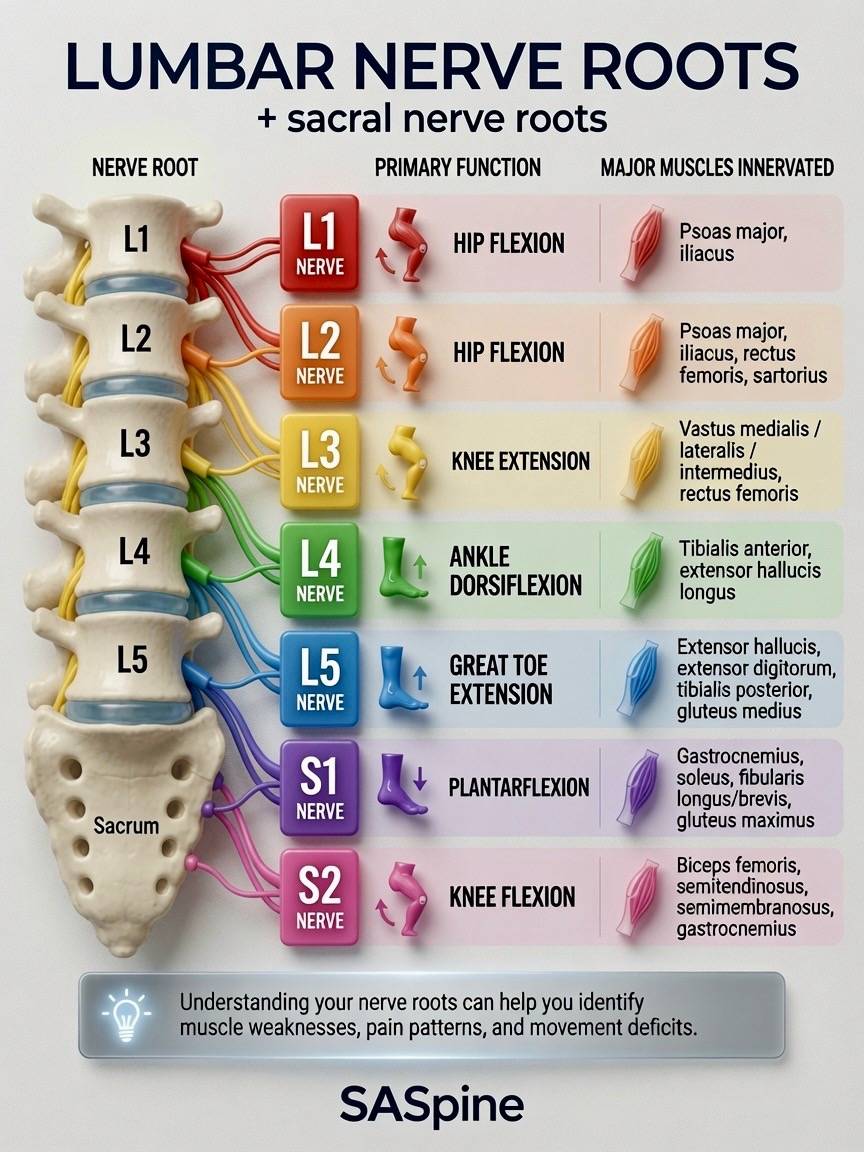
LUMBAR NERVE ROOTS + sacral nerve roots
@stevencyrmd
158.1K followers · usually 1.5K views a post
Views
25.3K
Likes
245
Comments
7
Shares
70
Why it worked
The post provides clear, concise, and visually organized educational information about a common health concern, making it highly shareable and valuable to a broad audience interested in health and wellness.
Summary
This image illustrates the lumbar and sacral nerve roots, detailing their primary functions and the major muscles they innervate. It emphasizes that understanding these nerve roots is crucial for identifying muscle weaknesses, pain patterns, and movement deficits.
Free accountLocked — create a free account to open
Transcript, structure and on-screen text
6 beats and 52 lines of on-screen text — the parts you need to write your own version.
The hook, the summary, why it worked and what it sells stay open on every video, signed in or not.
Original caption
Your nerves are your body’s communication highway. Every movement… every step… every muscle contraction begins with a signal traveling from your spine. When a lumbar nerve root becomes compressed—by a bulging or herniated disc, inflammation, or narrowing in the spine—the muscles supplied by that nerve can weaken and become painful. That’s why pain, weakness, tingling, or numbness in your leg doesn’t always mean the problem is in your leg. In many cases, the true source is higher up in your lumbar spine. Here’s how specific nerve roots typically influence lower body function: • L1-L2: Hip flexion (lifting your thigh) • L3: Knee extension (straightening your knee) • L4: Ankle dorsiflexion (lifting the front of your foot) • L5: Big toe extension (lifting your big toe) • S1: Ankle plantarflexion (pointing your foot downward) • S2: Knee flexion (bending your knee) Understanding which nerve root is involved helps explain your symptoms and guides the most precise treatment approach. If you’re experiencing persistent leg pain, weakness, tingling, or numbness, the expert team at SASpine is here to help identify the source and create a personalized plan for relief. Schedule your consultation today (contact info in bio). #BackPainRelief #NervePainRelief #LowBackPainRelief #sciaticarelief #sciaticapainrelief
More from @stevencyrmd
Their other posts in the index, biggest breakout first.