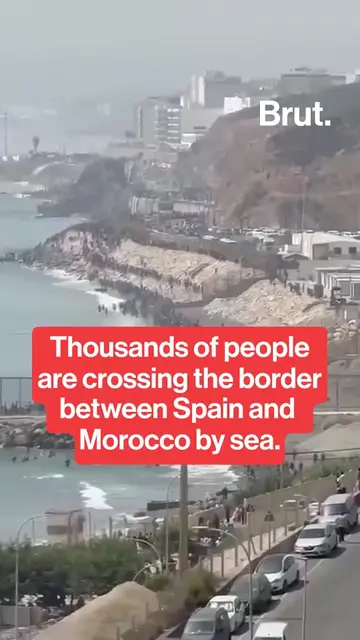
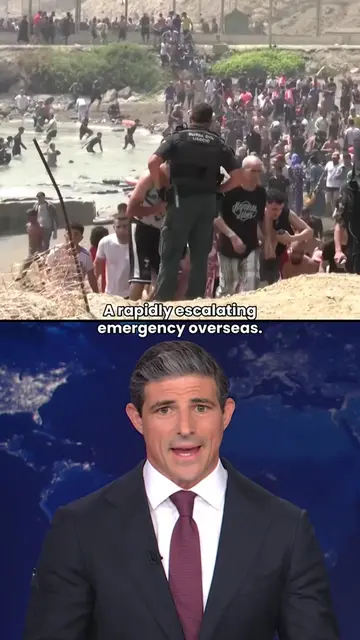
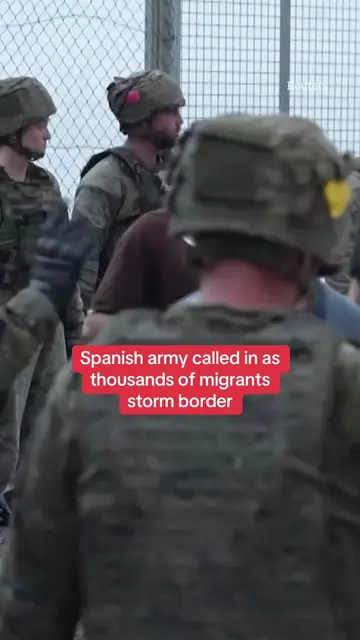
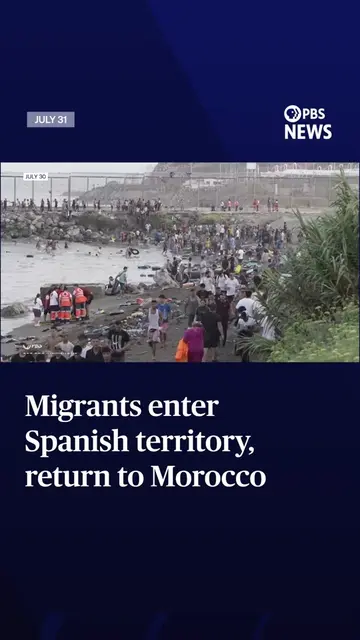
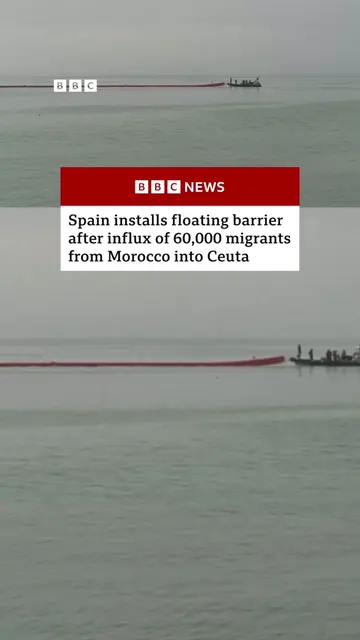
60,000 migrants have flocked into the Spanish enclave of Ceuta from Morocco in just one day. Politicians are now warning that many of them could end up coming to the UK on small boats. We know that the route from Morocco to Spain is already a popular pathway for illegal migrants to get in. where they can move freely around the Schengen area, including reaching Ceuta from Morocco. The Spanish authorities will have to be processed and given the 60,000 figure is more than two-thirds of the city's entire population. It's believed that the Spanish authorities could take many new arrivals to the mainland. From there, there are no physical borders stopping asylum seekers from making a dash to Britain. From Morocco to Spain is already a popular pathway for illegal migrants to get in. where they can move freely around the Schengen area, including reaching Ceuta from Morocco. The Spanish authorities will have to be processed and given the 60,000 figure is more than two-thirds of the city's entire population. It's believed that the Spanish authorities could take many new arrivals to the mainland. From there, there are no physical borders stopping asylum seekers from making a dash to Britain. We found multiple examples of migrants using the EU's land border with Africa with the goal of getting here. We found that they were posting their prospective routes online. In one case, the man said his path took him from Sudan to Niger, onto Algeria, and finally into Morocco. From there, the man used the Ceuta border to access the EU legally before swimming to Spain. He even showed himself in a video online climbing into a wetsuit before making the swim to Spain. The migrant called Yusuf later posed pointing at Gibraltar in the distance with an image of a British flag. Those are just a few examples from when crossings to Ceuta were limited to the hundreds a year, let alone 60,000 in one day. Nigel Farage, Chris Philp and Robert Jenrick are amongst the politicians that have warned that Britain must secure its own borders now to avoid another surge in small boat crossings caused by thousands coming into the European Union using this new method.