Loading video…
All breakouts
782Talking HeadProblem Callout hookHealth
Hook
Severe posterior pelvic tilt
@lyndsey.anastasis
3.3K followers · usually 1.6K views a post
Views
1.3M
Likes
23.6K
Comments
275
Shares
418
SoundTikTok sound · Crown
Why it worked
The video provides a clear visual and verbal explanation of a common anatomical issue, offering practical insights that resonate with viewers interested in health and fitness.
Summary
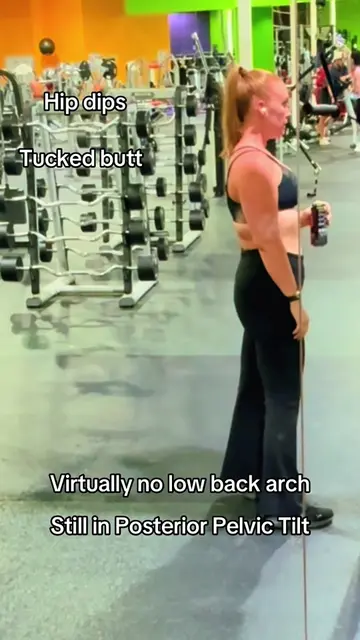
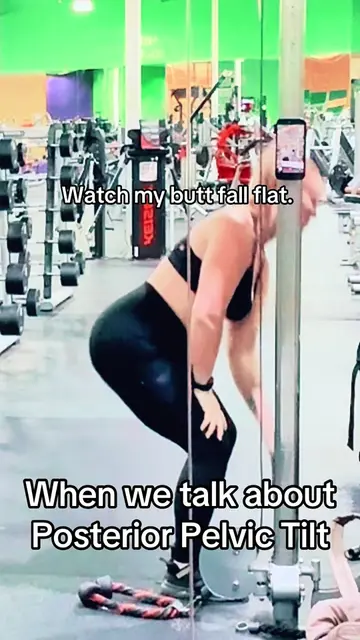
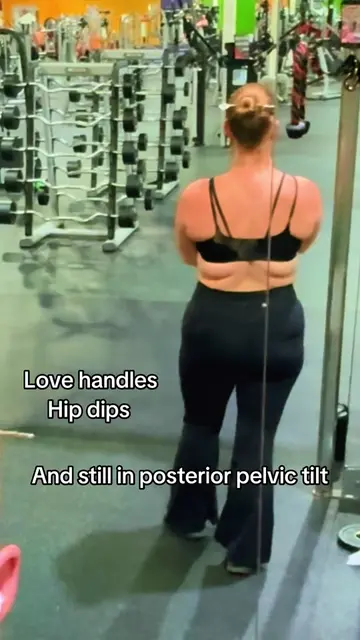
The video demonstrates the difference between a severe and a subtle posterior pelvic tilt. The creator explains that the subtle tilt can be harder to identify because the body may actively correct against it, making it difficult to diagnose solely based on lumbar curve.
Structure
- 1Introduction of severe posterior pelvic tilt
- 2Demonstration of subtle posterior pelvic tilt
- 3Explanation of why subtle tilt is hard to diagnose
- 4Emphasis on lumbar curve not being the sole indicator
On-screen text
Severe posterior pelvic tilt
Vs
"Normal" ppt
Transcript
Severe posterior pelvic tilt vs. the posterior pelvic tilt that can be much easier to miss. In the first example, I’m aggressively clenching my glutes and tucking my pelvis underneath me, so the posterior tilt is obvious. In the second, the tilt is more subtle. I can still create a visible low-back arch because I’m actively correcting against the posterior position — which is exactly why you cannot diagnose pelvic position from lumbar curve alone. Posterior pelvic tilt can sometimes be associate
Original caption
Severe posterior pelvic tilt vs. the posterior pelvic tilt that can be much easier to miss. In the first example, I’m aggressively clenching my glutes and tucking my pelvis underneath me, so the posterior tilt is obvious. In the second, the tilt is more subtle. I can still create a visible low-back arch because I’m actively correcting against the posterior position — which is exactly why you cannot diagnose pelvic position from lumbar curve alone. Posterior pelvic tilt can sometimes be associated with things like reduced lumbar lordosis, swayback posture, rib-cage compensation, altered hip mechanics, or low-back discomfort. But none of those are required for PPT to be present. You can have posterior pelvic tilt with or without: * a visibly flat low back * rib flare * swayback posture * low-back pain * an obvious tucked appearance And those same signs can also come from other mechanics entirely. That’s why the goal isn’t to look at one feature and say, “there’s the problem.” It’s to look at how the pelvis, lumbar spine, rib cage and hips are actually interacting. If you have to actively “undo” your resting pelvic position to create the posture you think is neutral, that resting position probably deserves a closer look.
More from @lyndsey.anastasis
More breakout videos from this creator.