Loading video…
All breakouts
20.5Talking HeadProblem Callout hookHealth
Hook
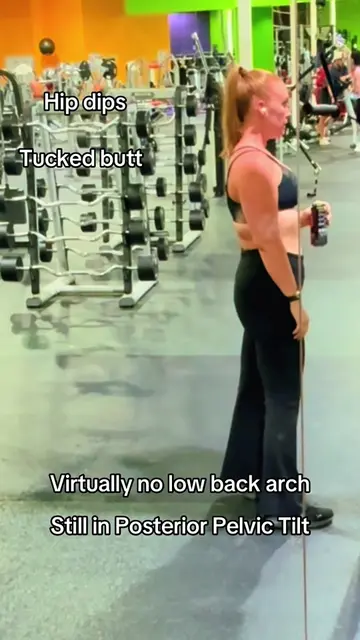
Love handles Hip dips
@lyndsey.anastasis
3.3K followers · usually 1.6K views a post
Views
33.0K
Likes
173
Comments
13
Shares
7
Why it worked
The video resonated by acknowledging the reality and complexity of long-term physical rehabilitation, contrasting with the often-unrealistic quick fixes presented on social media. This authenticity likely appealed to viewers facing similar challenges.
Summary
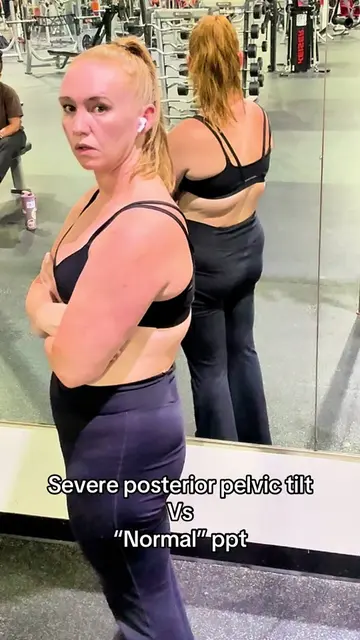
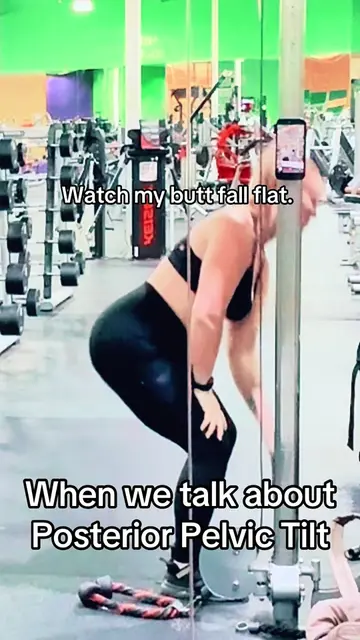
The creator discusses the ongoing process of correcting posterior pelvic tilt, emphasizing that it takes time and involves addressing multiple physical factors beyond simple stretching or strengthening. She highlights that this long-term commitment doesn't fit into quick transformation videos.
Structure
- 1Introduction of ongoing pelvic tilt correction
- 2Explanation of the time commitment required
- 3Discussion of multiple physical factors involved
- 4Contrast with short transformation videos
On-screen text
Love handles
Hip dips
And still in posterior pelvic tilt
Transcript
One month later… and yes, I’m still working on my posterior pelvic tilt. This is the part that doesn’t fit neatly into a 15-second transformation video. When your body has spent years adapting to a certain position, correcting it can take time. You’re not just stretching one tight muscle or strengthening your core—you may be working through mobility restrictions, muscle imbalances, breathing and rib positioning, movement patterns, and the way your body has learned to stand and stabilize. And som
Original caption
One month later… and yes, I’m still working on my posterior pelvic tilt. This is the part that doesn’t fit neatly into a 15-second transformation video. When your body has spent years adapting to a certain position, correcting it can take time. You’re not just stretching one tight muscle or strengthening your core—you may be working through mobility restrictions, muscle imbalances, breathing and rib positioning, movement patterns, and the way your body has learned to stand and stabilize. And sometimes the appearance people are trying to change—love handles, hip dips, lower-back shape, glute positioning—gets treated as purely a body-fat problem when structure and posture can change how that tissue sits and looks. It’s also one reason some people eventually pursue cosmetic or reconstructive procedures when they’re unhappy with their shape: changing body composition alone doesn’t necessarily change the underlying structure or tissue distribution. For me? Surgery isn’t the first answer. I want to see how much I can change by actually addressing the mechanics first. So no dramatic “fixed in 30 days” reveal here. Just a body that spent years adapting one way—and me patiently teaching it something different. Posterior pelvic tilt. Posture correction. Body recomposition. Mobility. Strength. And a whole lot of patience.
More from @lyndsey.anastasis
More breakout videos from this creator.