Loading video…
All breakouts
7.7Talking HeadStory Open hookEducation
Hook
This is the knife
@thehuntington
193.3K followers · usually 6.0K views a post
Views
45.3K
Likes
1.9K
Comments
38
Shares
120
Why it worked
The video leverages a historical artifact with a dramatic backstory, connecting it to well-known historical figures and events. The narrative of the assassination attempt and the soldier's bravery creates intrigue, while the visual of the artifact itself adds a tangible element to the history.
Summary
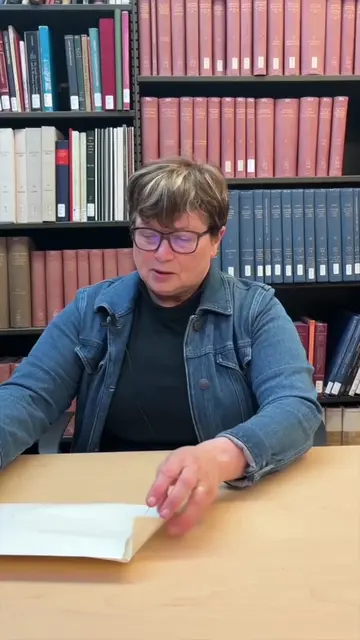
The video showcases a 19th-century Rio Grande bowie knife, identified as the weapon used in the attempted assassination of Secretary of State William H. Seward. It details how a soldier intervened, disarmed the attacker, and later received the knife as a souvenir, which is now part of The Huntington's collection.
Structure
- 1Introduction of the knife
- 2Historical context of its use
- 3The intervention of George Foster Robinson
- 4The knife as evidence and souvenir
- 5Its current status in The Huntington's collection
Product placement
Rio Grande knife: This is a type of bowie knife that was used in an assassination attempt. It is shown and described. Removing it would change what happens in the video. The Huntington: This is the institution that houses the knife. It appears as a watermark/logo and is the subject of the video. Removing it would change what happens in the video.
On-screen text
This is the knife
This is the knife
that Secretary of State William H. Seward
was wounded with
on the very same day
when President Lincoln was shot.
This is a very impressive piece of weaponry.
It's a bowie knife called a Rio Grande knife.
What happened was
one of the assassins,
Lewis Powell,
bursts into Seward's bedroom.
Seward was laid up after a carriage accident
with a very heavy neck brace on his neck.
And he proceeded to stab Seward
for some reason
but this knife bounced.
But at the same time,
a soldier named
George Foster Robinson
tackled Powell,
took the knife away from him,
and Powell ran off and was arrested later.
This knife was
featured as a piece of evidence
at the trial.
The evidence against Powell
was pretty damning
but after the trial,
Robinson asked the War
Department
to give him the knife as a souvenir.
So the knife came with his papers
and that's why we have it.
We don't really collect
three-dimensional objects
but sometimes they just come
to us on their own.
Original caption
While you may know our Library for housing books and paper objects, we have a few objects in our collections that might surprise you. 🫢🔪 This #NationalKnifeDay, take a look at this 19th-century knife used in the attempted murder of Secretary of State William H. Seward.
More from @thehuntington
More breakout videos from this creator.