Loading video…
All breakouts
11.4Talking HeadCuriosity Gap hookEducation
Hook
You might be wondering why
@thehuntington
193.3K followers · usually 6.0K views a post
Views
52.5K
Likes
3.1K
Comments
20
Shares
119
Why it worked
The video capitalizes on the natural curiosity surrounding rare and unusual botanical events, specifically the "Corpse Flower," which has a unique and often dramatic blooming process. By highlighting an anomaly in a familiar subject, it creates intrigue and encourages viewers to follow for updates.
Summary
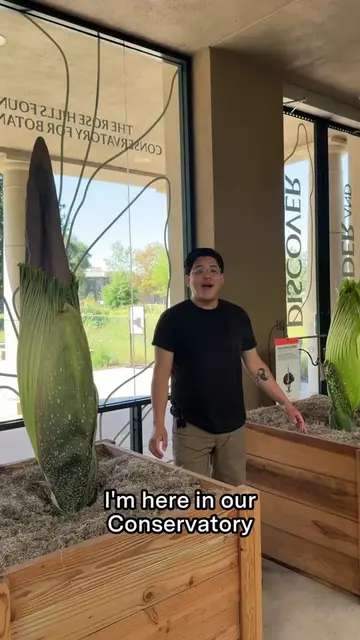
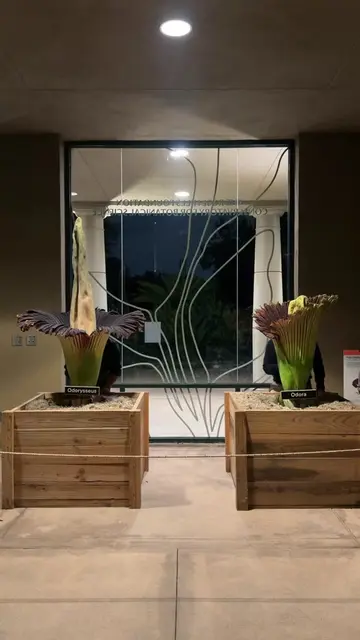
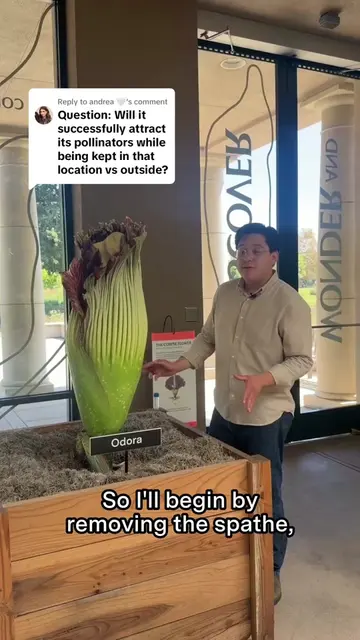
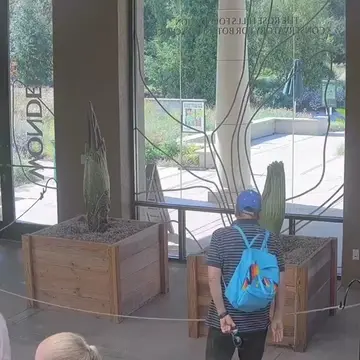
The video explains why the "Odora" corpse flower's bloom has an unusual shape this year, with its spadix inverted due to a developmental irregularity. Despite this anomaly, the plant's health and blooming process are not expected to be affected.
Structure
- 1Introduction of Odora and comparison to Odorysseus
- 2Explanation of the unusual bloom shape and inverted spadix
- 3Reason for the irregularity: developmental issue during inflorescence formation
- 4Reassurance: the irregularity won't affect blooming or plant health
- 5Call to stay tuned for updates on the plant's growth
Product placement
Odora (plant): appears, does not act. Removing it would change the video. Corpse Flower (plant): appears, does not act. Removing it would change the video. Odorysseus (plant): appears, does not act. Removing it would change the video.
Call to action
So if you're a fan of the Corpse Flower, stay tuned, as we'll give you more updates on the growth of this amazing plant.
On-screen text
You might be wondering why Odora does not look like Odorysseus.
The last time Odora bloomed was in 2024.
This year's bloom developed with an unusual shape.
If you look over here, the spadix has inverted in
due to a developmental irregularity
that occurred as the inflorescence was forming.
Although this is not normal,
the irregularity of the formation
of the spadix
will not affect the blooming
of the flower,
nor will it affect the health of the plant.
So if you're a fan of the Corpse Flower,
stay tuned,
as we'll give you more updates
on the growth of this amazing plant.
Original caption
There's been a lot of commotion around Odorysseus, but let's check in on Odora! 🌱 Find out why we can't see Odora's spadix just yet and learn more about this developmental irregularity with curator Brandon.
More from @thehuntington
More breakout videos from this creator.