Loading video…
All breakouts
312Text-HeavyOther hookEducation
Hook
Donald's Angel @donaldsangel
@ethanscarellc
8.4K followers · usually 824 views a post
Views
256.6K
Likes
1.3K
Comments
282
Shares
31
Why it worked
The post taps into a common fear and frustration regarding the rising costs of essential services like life insurance, particularly as individuals age and their need for such coverage increases. The dramatic price hike and the relatable personal story likely resonated with a broad audience, driving engagement.
Summary
A social media post details a significant increase in life insurance premiums over 15 years, from $78 to $700 per month, making it unaffordable for the policyholder as they age. The post expresses outrage and calls for the practice to be illegal.
Structure
- 1Introduction of initial premium and policy value
- 2Description of premium increases over time
- 3Statement of current unaffordable premium
- 4Expression of outrage and call for illegality
On-screen text
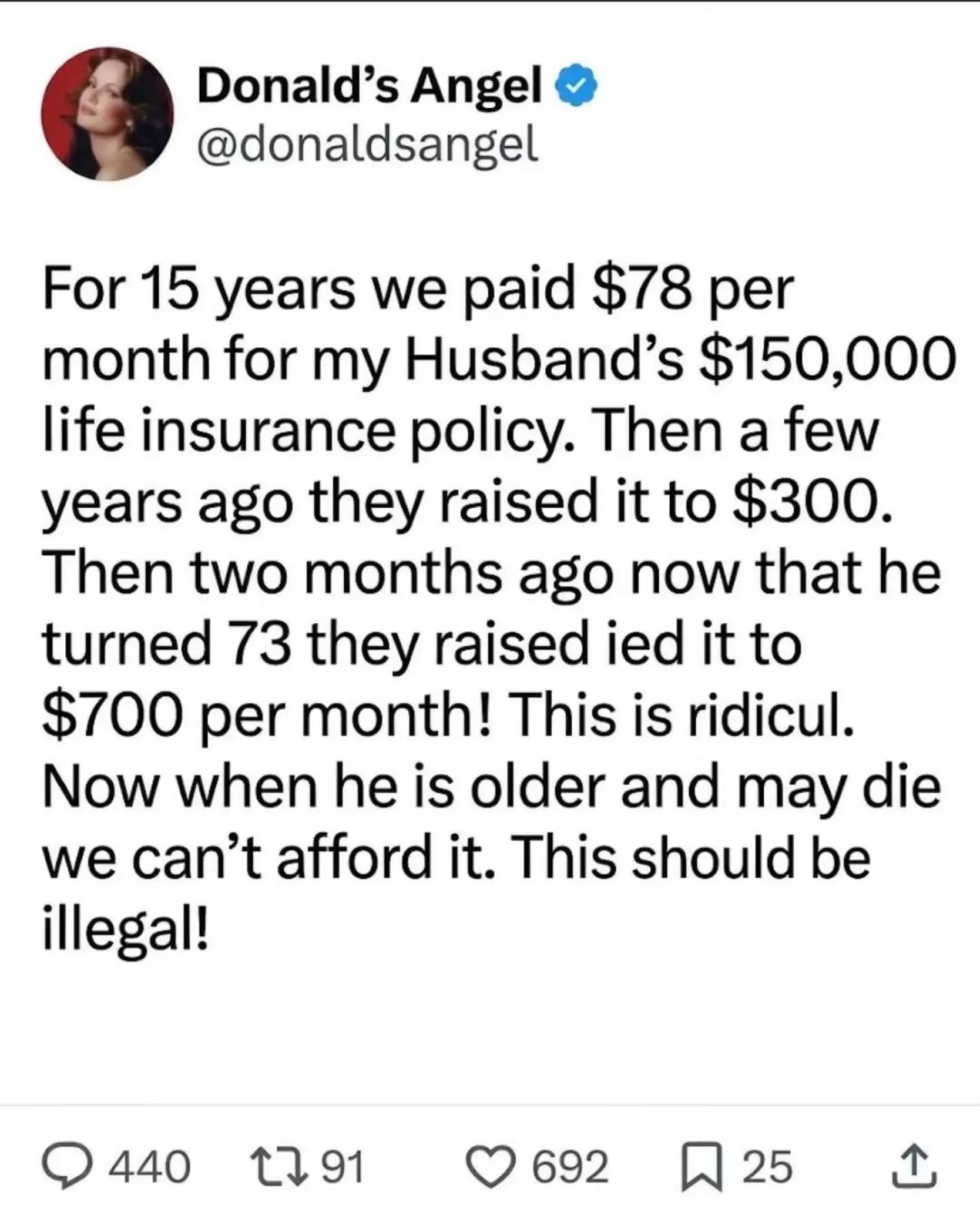
Donald's Angel
@donaldsangel
For 15 years we paid $78 per
month for my Husband's $150,000
life insurance policy. Then a few
years ago they raised it to $300.
Then two months ago now that he
turned 73 they raised ied it to
$700 per month! This is ridiccul.
Now when he is older and may die
we can't afford it. This should be
illegal!
Original caption
There may, however, be an important distinction depending on what type of life-insurance policy this is. If the $78 → $300 → $700 increases are premiums that were allowed to rise under the policy, it could be a form of annually renewable or other age-rated coverage. In that situation, the insurer can price coverage much higher as the insured gets older, subject to the policy terms and applicable law. But if this is supposed to be a level-premium term policy or permanent life-insurance policy, those dramatic increases deserve closer examination. The policy's original illustration, premium schedule, current policy statement, and any notices explaining the increase can tell you what's actually happening. Don't simply stop paying the $700 premium yet. Depending on the policy, there may be alternatives such as: 1. Reducing the $150,000 death benefit; 2. Converting to a lower-cost permanent policy, if a conversion option exists; 3. Using existing cash value to help pay premiums, if it's a permanent policy; 4. Changing the policy's premium structure; 5. Using a reduced paid-up option; 6. Replacing it with another policy—but only after determining whether your husband's age and health make replacement financially sensible. And because he's 73, don't cancel the existing coverage before knowing whether a replacement policy is actually available and affordable. #LifeInsurance #LifeInsuranceAwareness #TermPolicy #LifeInsuranceMonth
More from @ethanscarellc
More breakout videos from this creator.