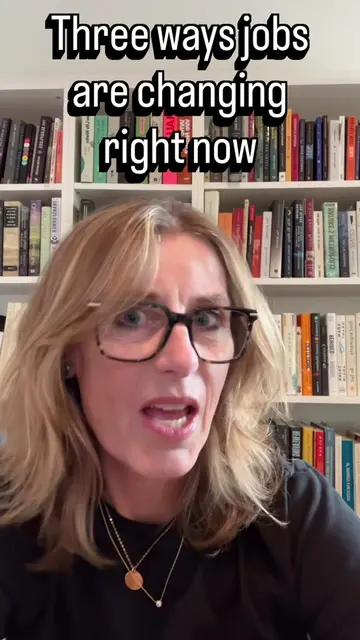
Loading video…
All breakouts
3.6Talking HeadDirect Question hookAI Tools
Hook
What AI can't do that you can
@stay_human25
21.0K followers · usually 1.2K views a post
Views
5.3K
Likes
291
Comments
38
Shares
24
Why it worked
The video effectively uses a famous landmark as a relatable example to explain a complex concept (the 'adjacent possible') and contrasts human creativity with AI's capabilities, making it thought-provoking and shareable.
Summary
The speaker discusses how Antoni Gaudí's unique creativity, stemming from his background and beliefs, allowed him to design the Sagrada Familia in a way that AI cannot replicate. Gaudí's tactile knowledge, trust in nature and gravity, and innovative use of hanging chain models demonstrate a form of creativity rooted in personal experience and insight, which AI, relying on data, cannot fully emulate.
Structure
- 1Introduction to Sagrada Familia and the concept of AI vs. human creativity
- 2Gaudí's background: coppersmith father, Catholic faith, Catalan heritage
- 3Gaudí's innovative design method using hanging chain models
- 4The importance of personal insight and experience in creativity
- 5AI's limitations in replicating human-like creativity
- 6Conclusion on the nature of adjacent possible and human ingenuity
On-screen text
What AI can't
do that you
can
Original caption
I am in front of the Sagrada Família and I want to tell you why it’s an awesome example of human creativity in a special way that AI can’t do yet. Gaudí’s father was a coppersmith. He grew up working with metal. He was Catholic and believed nature was already God’s answer. He was Catalan, trained outside the French academy. So he hung weighted strings upside down, let gravity pull them into perfect curves, photographed the model, and flipped the photo. That became the cathedral. An AI could not have done this because the adjacent possible is about the particular. A particular outlook and a particular life and a particular moment. #creativity #ai #stayhuman #barcelona #sagradafamilia
More from @stay_human25
More breakout videos from this creator.