Loading video…
All breakouts
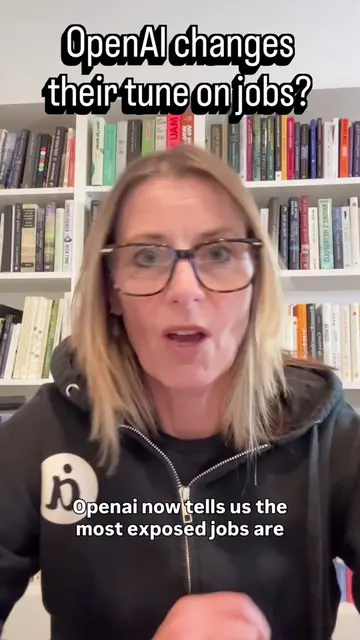
10.8Talking HeadListicle hookAI Tools
Hook
Skills your kids (and you) need now
@stay_human25
21.0K followers · usually 1.2K views a post
Views
15.7K
Likes
649
Comments
25
Shares
75
Why it worked
The video taps into a timely and relevant topic (AI's impact on jobs) and frames it as essential knowledge for parents and individuals. By referencing past research and promising updated insights, it creates a sense of authority and urgency, encouraging viewers to engage with the content and follow for more.
Summary
The speaker discusses how in 2016, they identified unpredictability as a key factor in jobs resistant to automation. They are now updating this analysis with generative AI in mind, focusing on complexity rather than just unpredictability. The series will explore five dimensions of work that are irreducibly complex and difficult for AI to replicate.
Structure
- 1Introduction to the 2016 study on automation and skills
- 2Identifying unpredictability as a key factor
- 3
Original caption
Skills your kids (and you) need now. In 2016 we analyzed over 900 jobs and found that humans beat machines when things are unpredictable. Now we are updating the analysis in a new series on staying competitive in the Gen ai age. #stayhuman #skills #aiandjobs #ai #generativeai
More from @stay_human25
More breakout videos from this creator.