Loading video…
All breakouts
8.7Talking HeadOther hookEducation
Hook
The MAP sensor is a triage tool
@masterautotraining
54.2K followers · usually 2.7K views a post
Views
23.1K
Likes
1.3K
Comments
17
Shares
228
Promoted product
Master Automotive Traininghttps://linktr.ee/masterautomotive ↗
Why it worked
The video provides practical, actionable advice on using a common car sensor (MAP sensor) for diagnostics, which is valuable for mechanics and car enthusiasts. It breaks down complex information into simple, testable steps, making it easy to follow and apply.
Summary
This video explains how to use the MAP sensor as a diagnostic tool for automotive issues. It details three key readings: key-on engine-off, idle, and cranking with the throttle closed, to identify potential problems like mechanical issues, restricted exhaust, or valve timing problems.
Structure
- 1MAP sensor as a triage tool
- 2Key on, engine off reading
- 3Idle reading
- 4Cranking reading
- 5Throttle snap test
- 6Using MAP sensor as a diagnostic tool
Product placement
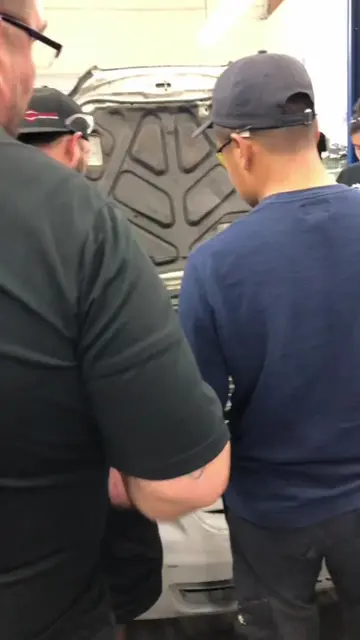
The video features a man wearing a shirt with "MAT MASTER AUTOMOTIVE TRAINING" logo, and shows a diagnostic tool (INNOVA 5610) and engine components. The creator is promoting their automotive training services.
Original caption
Your MAP sensor is more than a sensor—it's one of the fastest diagnostic tools you already have. Before reaching for a scope or pressure transducer, use MAP sensor data to quickly identify whether you're dealing with a mechanical problem, restricted exhaust, valve timing issue, or something else. Smart diagnostics always starts with the data. 📍 Master Automotive Training – Rancho Cucamonga, California 🔧 Advanced Engine Performance & Automotive Diagnostics Training 👉 Register today: https://campscui.active.com/orgs/MasterAutomotiveTraining?orglink=camps-registration# #MasterAutomotiveTraining #MAPSensor #EngineDiagnostics #AutomotiveDiagnostics #ScanTool #RanchoCucamonga #MechanicTraining #AutoTech #EnginePerformance #CaliforniaTechnicians
More from @masterautotraining
More breakout videos from this creator.