Loading video…
All breakouts
11.4Text-HeavyBefore / After hookHealth
Hook
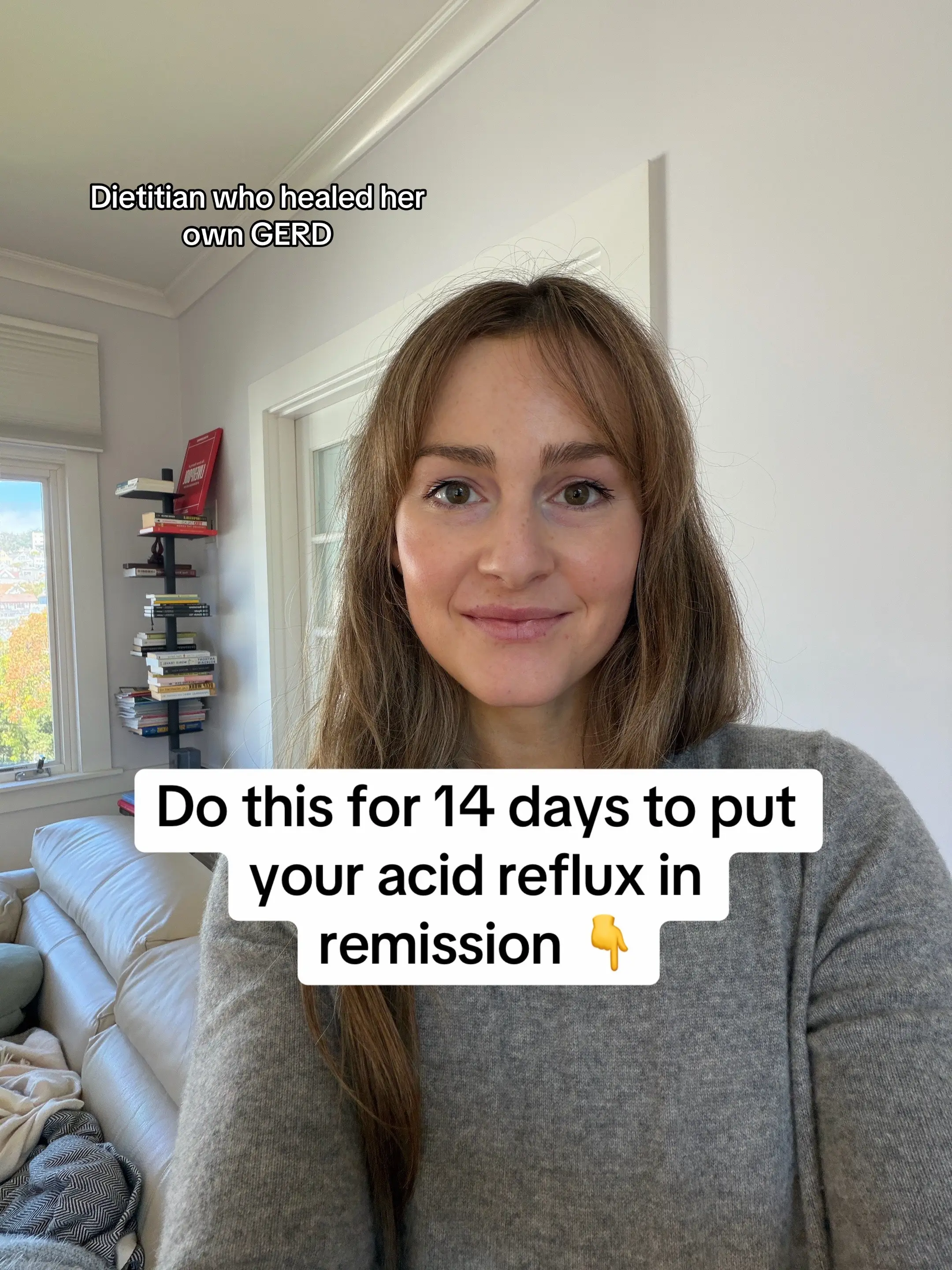
Dietitian who healed her own GERD
@mollypelletier.rd
317.1K followers · usually 3.0K views a post
Views
53.4K
Likes
800
Comments
57
Shares
115
Why it worked
The post leverages a relatable health problem (acid reflux) and offers a clear, actionable solution with a defined timeline, presented by a credible source (a dietitian). The text-heavy format is easily digestible for quick information consumption.
Summary
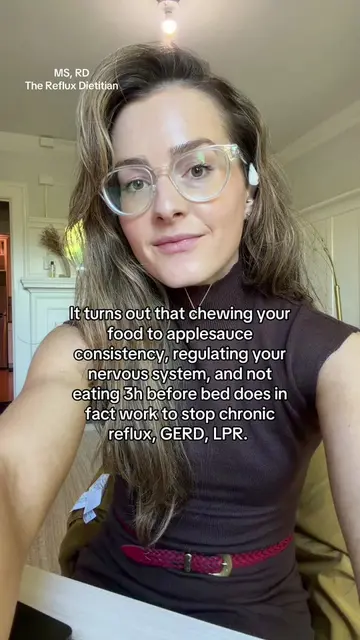
A dietitian shares a 14-day plan to help put acid reflux into remission. The plan focuses on mindful eating practices like chewing food thoroughly and setting down utensils between bites.
Structure
- 1Introduction of the dietitian and her GERD healing journey
- 2Call to action: do this for 14 days for remission
- 3Explanation of mindful eating techniques
On-screen text
Dietitian who healed her
own GERD
Do this for 14 days to put
your acid reflux in
remission 👇
Original caption
Six months of cutting foods and still waking up with that burn? For a lot of the people I work with, relief didn't come from removing one more thing. It came from three small shifts, run consistently for 14 days. Here's the experiment we'd run together: 1. Mealtime Mindfulness Chew each bite to an applesauce consistency, set your fork down between bites, and keep big gulps of liquid light during the meal. Chewing is where digestion actually starts, and slowing down cues your parasympathetic (rest-and-digest) system so your stomach is primed for the food. Well-chewed food also leaves the stomach more smoothly, which means less pressure pushing up against your LES. 2. The 3-Hour Buffer Give yourself a 3-hour buffer between your last bite and lying down. Beverages are still fine. This one has real data behind it. In a randomized crossover trial of 30 reflux patients (Piesman et al., 2007, Am J Gastroenterol, PMID 17573791), eating 2 hours before bed produced significantly more nighttime acid reflux than eating 6 hours before (p=0.002). Lying down on a full stomach takes gravity out of the equation and lets acid pool right at the valve. The buffer gives your stomach time to empty first. 3. Add soluble fiber, strategically This is the addition, not the restriction. Soluble fiber feeds your microbiome, which produces short-chain fatty acids that support the gut lining and healthy motility. In a Harvard analysis in Clinical Gastroenterology and Hepatology (Samuthpongtorn et al., 2023, PMID 37481119), higher dietary fiber intake was associated with a lower risk of reflux symptoms. Think oats, chia, ground flax, psyllium, cooked carrots. Add it slowly, with water, so your gut can adjust. Small hinges swing big doors. Run these three for 14 days and pay attention to how your mornings feel. My free 14-Day Reflux Reset walks you through it. Check the link in my bio. Follow for more, and share this with someone who's tired of guessing at every meal. #AcidReflux #GERD #LPR #SilentReflux #RefluxRelief
More from @mollypelletier.rd
More breakout videos from this creator.