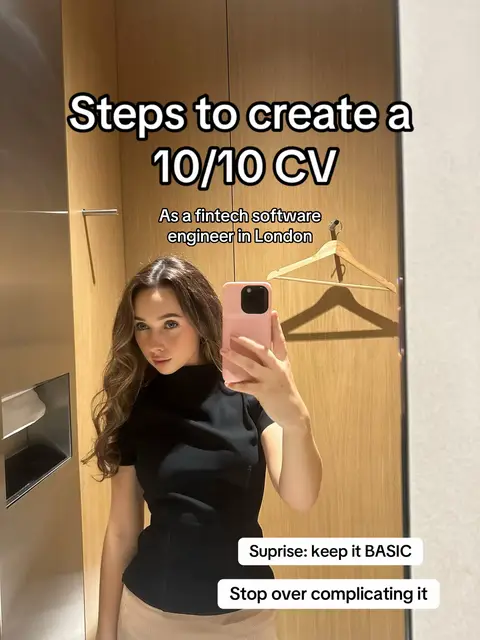
I wasn't going to post this, but this is the exact CV that got me my 10k pay rise. Now, don't tell me I don't put you guys on. So at the top of your CV, it should always have a short professional summary. Keep it concise, keep it tight. We don't want a long-winded life story of everything you've done. We want impact, impact statements about yourself that can draw an employer in. The main thing I focused on is the job description of roles that I wanted to apply in. So I was looking at finance analyst roles and looking to see what qualities they are looking for. And then I aligned that with the qualities that I have. And then I wrote it in my professional summary. And then your education. Now, when you're later in your career, your education can go last because you've got 10 plus years of experience. But as of now, I want my education to stand out because that's the most recent thing I've done. This section is where I would very, very highly advise you to upskill what you have. So have you done LinkedIn courses? Have you mastered in Excel? Do you know how to use Power BI? All those things you can put in your education section. So I've done a course in Power BI and I got X result. Now for the most important part, the experience section. In my experience section, I didn't just list what I do day to day. Every bullet point follows the same pattern: what I did, how I did it, and what it achieved. Instead of just saying I'm responsible for reporting, I've said that I've automated the reporting using the data systems that my employer uses, which is SAP and Concur. And then that resulted in real-time identification of cost overspend and significantly reduced month-end analysis. And that is the difference between a good CV and an average CV. Average CVs just speak about what they did, their roles and responsibilities. Instead of explaining how they did it and what that resulted in. Bonus tip: ATS. Most CVs get run through an ATS system. So it scans for keywords from the job description and your CV. And then it puts your CV forward. So if the job spec says you need experience in forecasting, and in your CV you've got experience in budget forward looks, and the word forecasting isn't in your CV, then it won't be picked up by the ATS system. You need to put forecasting in your CV for the ATS system to put you through to the next stage. Now, at the very bottom, I included my extra curricular activities that was outside of my day job. So I was co-chair of a network called the United for Race Equality Network. Now, that is completely outside of my day job and that shows qualities that not everybody has. It takes initiative, it takes leadership, it takes planning to run a network, run some events. Make sure it's only one or two lines because that is not the showcase of your CV. That is just additional information for the employers to get to know you a bit. And then at the very, very bottom is the key competencies section. So this is where you can showcase the tools and skills you've learned along the way. This will help the employer see very quickly if you have the skills and competencies to do the job. And on top of that, it will help you get past the ATS system to put you through to the next stage. Now, if you want the link to my exact CV template, click the link in my bio and you can find it there.