Loading video…
Sound

original sound - bloombergopinion
Bloomberg Opinion · Original audio
0:00–:––
Playing this video’s own audio, so you’ll hear the creator over the sound.
We didn’t find a product being promoted in this video. Its hook, format and structure below still show why it took off.
Browse products winning on TikTokThe video effectively uses a "natural experiment" framing to discuss a complex economic issue, making it relatable and engaging. By presenting statistics and naming well-known corporations, it grounds the abstract economic concepts in tangible examples, prompting viewers to consider the broader societal implications of corporate wage practices and tax policies.
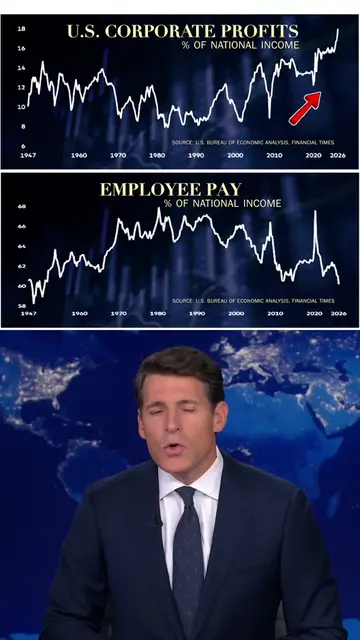
This video argues that the current economic system, where corporations pay low wages and rely on government assistance programs for their employees, is unsustainable. The speaker highlights that regular taxpayers are effectively subsidizing these corporations through various tax credits and assistance programs, while the corporations themselves benefit from lower tax rates.
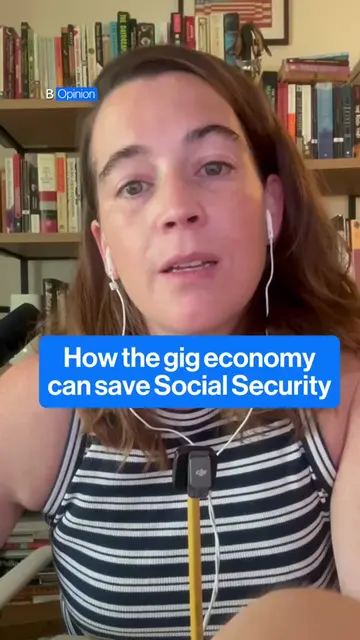
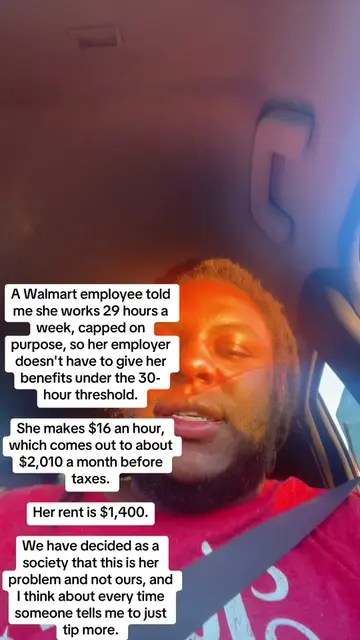
There are a lot of jobs in the US economy that pay miserably low wages. And there are a lot that offer a reasonable hourly rate but still result in miserably low earnings because of unstable, fluctuating schedules. How many is hard to know, but it’s not a small number: According to the Government Accountability Office, there are about 9 million #Medicaid recipients who are working full-time, and 7.5 million who receive #SNAP benefits. But the most interesting aspect of the report, according to @keds_economist may be where exactly these people work. The GAO collected data from 11 state agencies to identify the employers. Most of these full-time workers on need-based assistance worked for the private sector in transportation, restaurants and retail. While one in five employees work for small businesses with fewer than 10 employees, more than half work for employers that had at least 100 employees. #Amazon #Fedex #Walmart
No full-time workers should be on Medicaid
Introduction to economic natural experiments
The hypothetical scenario of corporations setting labor conditions
Statistics on full-time workers on Medicaid and SNAP
Identification of large, profitable corporations employing these workers
The consequence of corporations paying low wages
The role of taxpayers in subsidizing low-wage employment
Conclusion on who bears the burden of low wages and corporate tax cuts
Medicaid (ACTS - it is a government program that provides health insurance to low-income individuals and families, and is discussed as a form of assistance for workers. Removing it would change the topic of the video.) SNAP (ACTS - it is a government program that provides food assistance to low-income individuals and families, and is discussed as a form of assistance for workers. Removing it would change the topic of the video.) Government Accountability Office (APPEARS - it is a government agency whose report is cited as a source. Removing it would not change what happens in the video, but would remove the source attribution.) Amazon (APPEARS - it is a company whose name is mentioned as an example of a large, profitable corporation. Removing it would not change what happens in the video, but would remove the example.) Walmart (APPEARS - it is a company whose name is mentioned as an example of a large, profitable corporation. Removing it would not change what happens in the video, but would remove the example.) FedEx (APPEARS - it is a company whose name is mentioned as an example of a large, profitable corporation. Removing it would not change what happens in the video, but would remove the example.) Bloomberg Opinion (APPEARS - it is the name of the media outlet publishing the opinion piece. Removing it would not change what happens in the video, but would remove the publisher attribution.)
Playing this video’s own audio, so you’ll hear the creator over the sound.
Outliers and viral hits: their videos on Overshot, all time.