Loading video…
All breakouts
71.0Text-HeavyDirect Question hookLifestyle
Hook
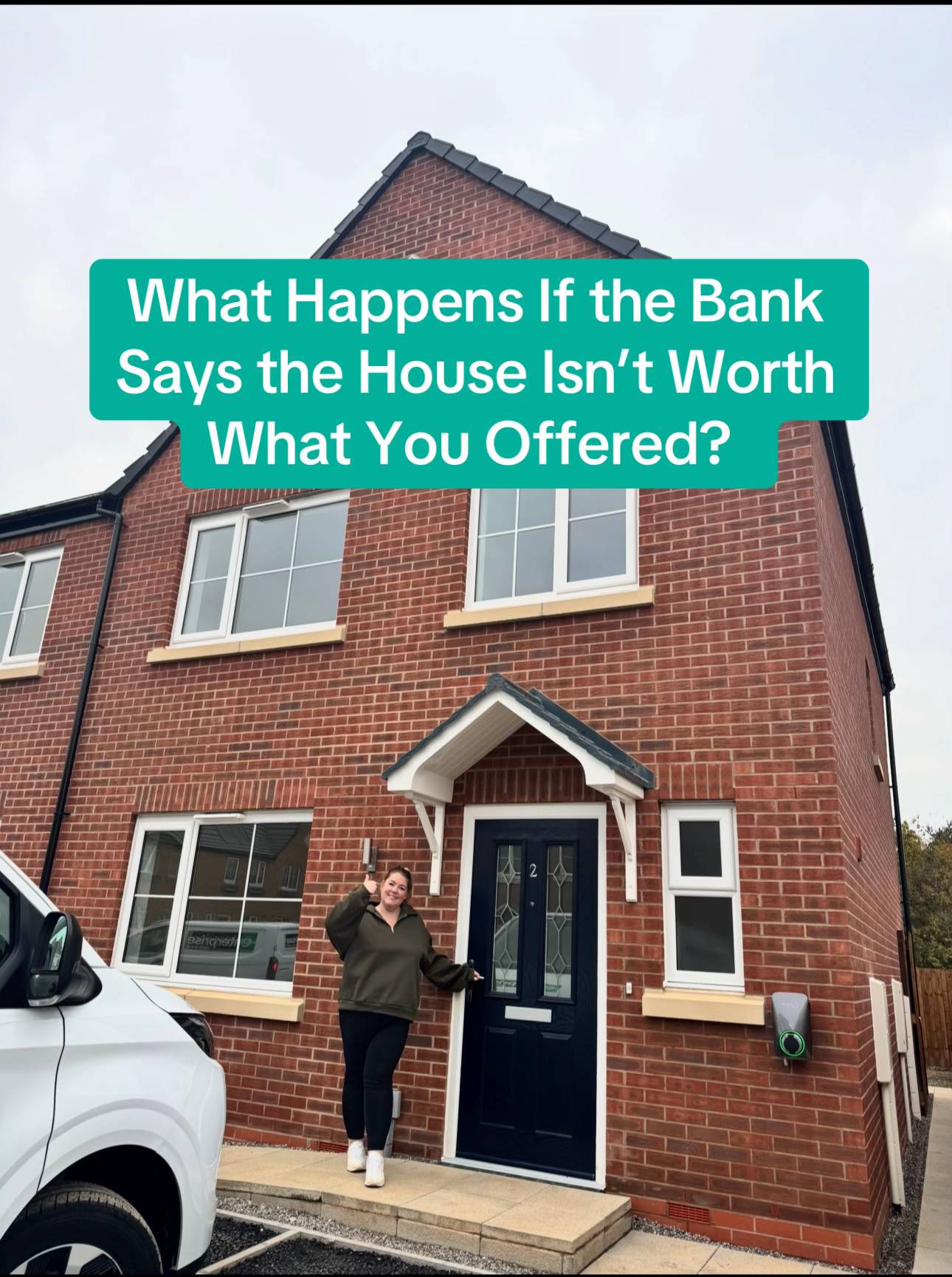
What Happens If the Bank Says the House Isn't Worth What You Offered?
@number2atmolyneux
6.8K followers · usually 2.4K views a post
Views
45.4K
Likes
139
Comments
19
Shares
28
Why it worked
The post addresses a common and stressful scenario for first-time homebuyers, providing clear, concise information and actionable advice in an easy-to-digest format, which likely resonated with a large audience facing similar situations.
Summary
This photo post explains what happens when a mortgage lender's valuation of a house is lower than the agreed purchase price, a situation known as a down valuation. It details why lenders care about property value and outlines potential solutions for buyers facing a funding gap.
Structure
- 1Introduction to down valuation scenario
- 2Explanation of why lenders care
- 3Simple breakdown of the numbers
- 4Consequences and potential solutions
- 5Clarification that a down valuation isn't the end
- 6Beginner's lesson on offers vs. lender's decision
On-screen text
What Happens If the Bank Says the House Isn't Worth What You Offered?
You offer £250,000 for a house...
Then your mortgage lender says:
"We think it's worth £230,000." 😳
Now what?!
This is often called a:
DOWN VALUATION
You've agreed one price with the seller...
but the lender's valuation comes back lower.
Why does the lender care?
Because they're potentially lending you a LOT of money secured against this property.
They want to know what they consider the property to be worth for lending purposes.
Let's keep it really simple:
You agree to pay £250k
Lender values it at £230k
The lender may base its lending calculations on that lower valuation.
That can potentially leave you with a funding gap.
Depending on your circumstances, you might need to:
• renegotiate the price
• put in more of your own money
• explore other mortgage options/advice
• or potentially reconsider the purchase
But a down valuation doesn't automatically mean:
X the house is definitely "only worth" that amount
X you've done something wrong
X the purchase is automatically over
It means the lender's valuation for mortgage purposes is lower than your agreed purchase price.
The beginner lesson:
The seller decides what they'll accept.
YOU decide what you'll offer.
But your mortgage lender decides how much it's prepared to lend against that property.
Those aren't always the same number. 🤯
Original caption
You’ve offered £250,000 for a house, the seller has accepted it and then your mortgage lender values the property at £230,000. What happens now? This is commonly known as a down valuation, and it’s something first-time buyers may not even realise can happen until they’re already buying a property. Your mortgage lender is potentially lending a substantial amount of money secured against the house, so it needs to be satisfied with the property’s value for mortgage purposes. If its valuation is lower than the price you’ve agreed to pay, that can affect how much the lender is prepared to lend and potentially create a funding gap. What happens next depends on the individual situation. A buyer might try to renegotiate the purchase price, potentially contribute more of their own money if they can and if appropriate, explore their mortgage options with professional advice, or ultimately decide whether they still want to proceed. And a down valuation doesn’t automatically mean somebody has objectively proved what a property is “really worth”. It means the lender’s valuation for its lending purposes has come back below the agreed purchase price. It’s another reason an accepted offer isn’t the end of the house-buying process. The price you offer, the price the seller accepts and the valuation your mortgage lender uses don’t necessarily have to be identical. 🏡 #DownValuation #MortgageUK #FirstTimeBuyer #BuyingAHouseUK #creatorsearchinsights
More from @number2atmolyneux
More breakout videos from this creator.