Loading video…
All breakouts
90.1AnimationStory Open hookEducation
Hook
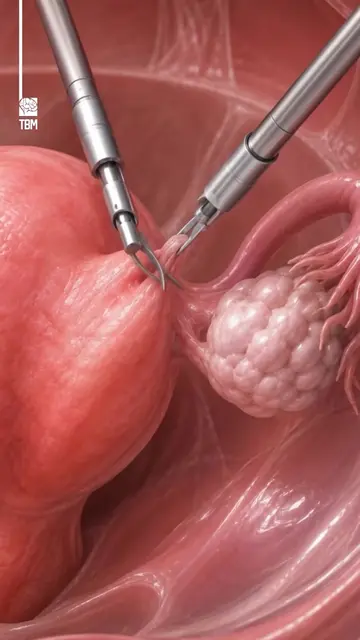
Inside the uterus,
@thebrainmaze
1.0M followers · usually 11.5K views a post
Views
595.2K
Likes
12.4K
Comments
91
Shares
1.4K
Why it worked
The video effectively uses clear, animated visuals to explain a complex medical topic in an easily digestible format. The breakdown of fibroid types and symptoms makes the information accessible and memorable for a broad audience.
Summary
This video explains uterine fibroids, which are non-cancerous growths that form in the uterine wall. It details the four main types of fibroids and the symptoms they can cause, such as heavy periods, pain, and fertility issues.
Structure
- 1Introduction to uterine fibroids
- 2Explanation of fibroid formation
- 3Description of four main types of fibroids
- 4Discussion of potential symptoms
Product placement
TBM (appears, does not affect video content), The Brain Maze (appears, does not affect video content), The Maze Studio (appears, does not affect video content)
On-screen text
Inside the uterus,
some women develop
growths called uterine
fibroids.
These are non-cancerous
tumors
that form from the muscle
tissue of the uterine wall.
There are four main types:
intramural fibroids,
SUBMUCOSAL
FIBROIDS
submucosal fibroids, which
grow toward the inner
cavity;
SUBSEROSAL
FIBROIDS
subserosal fibroids,
which develop on the outer
surface of the uterus;
PEDUNCULATED
FIBROIDS
and pedunculated fibroids,
which grow on a stalk.
Some fibroids cause no
symptoms,
while others can lead to
heavy periods,
pelvic pressure, pain,
frequent urination, or
fertility problems.
Original caption
What Are Uterine Fibroids? - Uterine fibroids are common noncancerous growths that develop in or around the uterus. They can grow in several locations and vary greatly in size. While some cause no symptoms, others may contribute to heavy periods, pelvic pain, pressure, frequent urination and fertility problems.
More from @thebrainmaze
More breakout videos from this creator.