Loading video…
All breakouts Locked — upgrade to Pro to open.Open on TikTokPro

No preview available · watch on TikTok below
37.8Health
Post
Post by @mollypelletier.rd
@mollypelletier.rd
322.6K followers · usually 2.0K views a post
Views
72.0K
Likes
580
Comments
53
Shares
90
We’re still analyzing this post.
Original caption
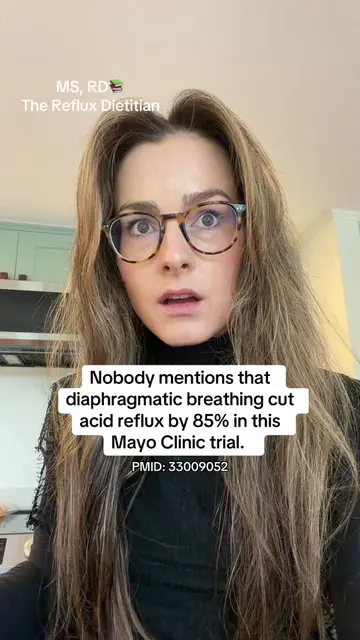
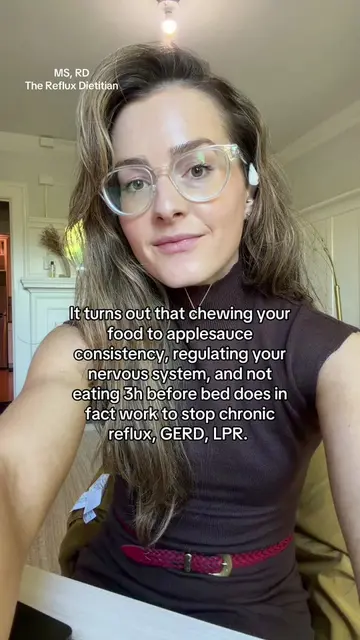
Food is rarely what's actually driving your reflux. Yes, certain foods can trigger symptoms. But the bigger contributors are usually underneath: how well your LES and diaphragm hold the barrier closed, an imbalanced gut microbiome, and a nervous system stuck on high alert. I had GERD for over a decade, and I kept cutting foods. I gave up coffee for a full year and my reflux still didn't go away. All that restriction kept my nervous system on edge and was hard on my microbiome. A low-acid diet helped for a while, but working on all of my contributors together is what finally worked. I've worked with hundreds of people with reflux, and I see the same pattern. They get so focused on the next food to eliminate that they never get to their LES strength or their nervous system. A place to start is the LES Lock: 1 to 5 minutes of diaphragmatic breathing right after meals. Let your rib cage expand 360 degrees (front, sides, and back), then breathe out a little longer than you breathed in. It trains the diaphragm that wraps around your LES and helps your nervous system settle after you eat. In a 4-week trial, people who trained their breathing this way spent about half as much time with acid in their esophagus. Follow for more tips on how to address your reflux at the root. 📚 Eherer et al., 2012, Am J Gastroenterol, randomized controlled trial, n=19, PMID: 22146488. #refluxtok #acidreflux #gerd #LESlock #refluxdietitian
More from @mollypelletier.rd
More breakout videos from this creator.