Loading video…
All breakouts Locked — upgrade to Pro to open.Open on TikTokPro
No preview available · watch on TikTok below
20.6Health
Post
Post by @mollypelletier.rd
@mollypelletier.rd
314.0K followers · usually 4.4K views a post
Views
81.7K
Likes
893
Comments
48
Shares
41
We’re still analyzing this post.
Original caption
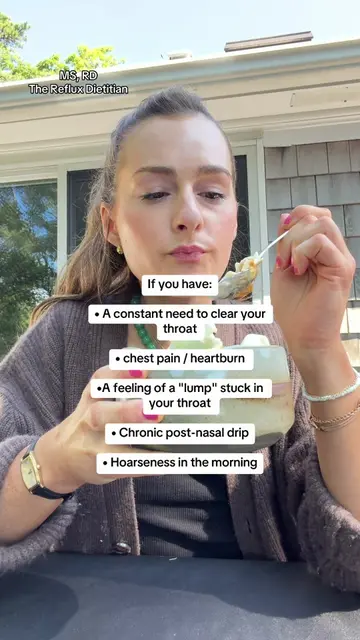
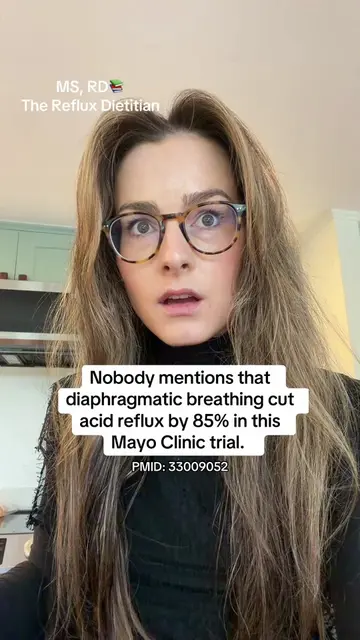
Most people with reflux don't make too much acid. The acid is ending up in the wrong place. Your stomach is supposed to be acidic. Reflux happens when the valve at the top of your stomach (the LES) lets that acid travel up into your esophagus or throat. The most common root contributors: A weak LES: the valve doesn't hold a tight seal. It sits inside your diaphragm, a muscle you can train with diaphragmatic breathing, letting your rib cage expand 360 degrees. Nervous system dysregulation: chronic stress can throw off the LES's timing, so it relaxes when it shouldn't. Much of reflux happens during these brief, mistimed openings. H. pylori: a common stomach bacteria that's worth testing for if your symptoms keep coming back. Other factors, like a hiatal hernia or slow stomach emptying. Cutting acidic foods and taking a PPI lowers the acid. Neither one changes where the acid is going or why. Relief comes from working on the contributors together. Follow along, and grab my free 14-Day Reflux Reset at the link in my bio. 📚 Dent et al., 1980, J Clin Invest, manometry/pH study, n=10, reflux occurred during transient LES relaxations rather than low baseline pressure, PMID: 7356677. Halland et al., 2021, Am J Gastroenterol, RCT, n=33, LES pressure 23.1 to 42.2 mmHg after diaphragmatic breathing, PMID: 33009052. #acidreflux #GERD #refluxtok #heartburn #LPR
More from @mollypelletier.rd
More breakout videos from this creator.