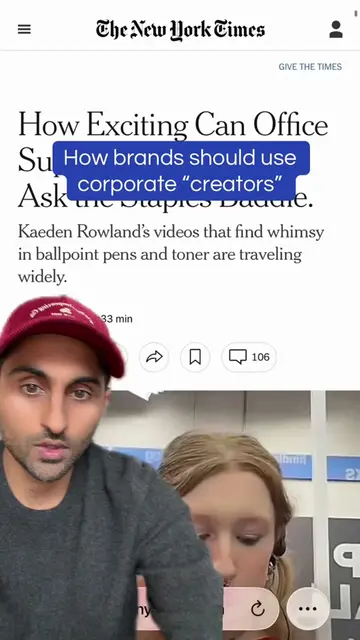
Bad reporting and why this isn't the first $1bn AI company. Unsurprisingly poor reporting from the New York Times once again. Here is this piece that they wrote yesterday and what the actual story is. Yesterday they write how AI helped one man and his brother build a $1.8 billion company. Both the headline and the content of the article make it seem like AI is the big savior here that enabled this outcome, when the reality is much more different. First, what is this company? The company is called Medvi. And to no surprise, they sell GLP-1s. And you might think, hey, I know companies like that, Hims, Roman. That is a serious build in business. You have to go hire doctors, pharmacists, get the right licensing, credentialing. While yes, that used to be the case, you can actually just use turnkey platforms like OpenLoop and CareValidate, which offer all of this as a service. So what this means is that a telehealth platform like Medvi, they are a website that connects to these systems and they are in the business of just acquiring customers. And the way that they acquire customers is through a very aggressive gray hat paid acquisition strategy on Meta. They will create many tens or hundreds of pages of like fake doctors, run some kind of like crazy ads and get people to go sign up for GLP-1s. A $1.8 billion company with just two employees? In the age of AI, it's increasingly possible. Sam Altman, the chief executive of OpenAI, predicted the rise of a new breed of superefficient company in 2024. A one-person business worth $1 billion would have been unimaginable without AI, he said on a podcast, and now it will happen. Now as AI tools spread, entrepreneurs are harnessing the technology to expand their start big at scale at speed with very few humans. Especially in tech, are getting ruption, too. Pinterest, Block and thousands of workers in recent months, citing efficiencies enabled by AI. Mr. Gallagher, who formerly ran a start-up that sold wristwatches, said he thought Mr. Altman's prophecy of a one-person $1 billion company would be a firm that built AI. He was excited when he realized he may have done it, taking an old idea, being a middleman for weight-loss drugs and using AI to turbocharge it. So the stuff that he is using AI for is just like generating copy, generating fake ads, generating images on his website. At this exact moment, there are like 500 e-com operators doing that exact thing for their brand. So the article says here like, okay, Sam Altman's OpenAI says we're going to have superefficient companies, a one-person business worth a billion dollars, kind of highlighting that this is that company. And it isn't really because there isn't that much to be done here. You need a website and you need to run ads and offer some like baseline level of customer support. You don't make the products, you don't ship the products, you don't have doctors, you don't have pharmacists, you don't have all this back-end complexity. And anyone who operates in the e-commerce space knows of people. I mean, this is basically like drop shipping, they're drop shipping healthcare. But there are many e-commerce brands that is doing hundreds of millions of dollars in revenue with one or two people, full-time employees and a litany of contractors using AI in these ways, acquiring the same amount of customers. But the difference is, those guys don't talk about it to the New York Times and they also sell a $50 product versus something that is $3,000 a year. The actual story here is why are we drop shipping healthcare and how insatiable is the demand for weight-loss drugs.