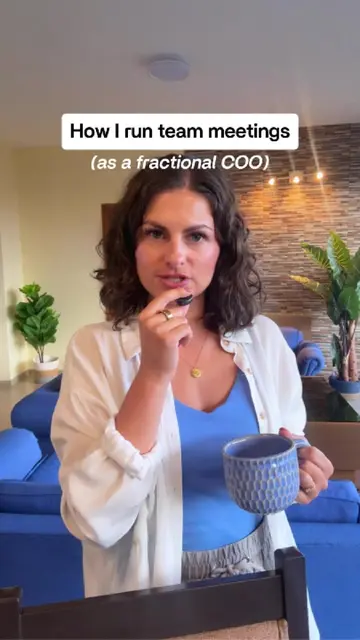
Loading video…
All breakouts

25.8Talking HeadStory Open hook
Hook
Okay so
@growwithpolina
9.0K followers · usually 837 views a post
Views
21.4K
Likes
1.3K
Comments
31
Shares
92
Why it worked
The video provides actionable advice on a common leadership challenge, differentiating between individual and structural issues in a clear and relatable way. The speaker's emphasis on a non-judgmental, curiosity-driven approach makes the advice more approachable and effective.
Summary
This video explains that when addressing team underperformance, it's crucial to first understand individual experiences before focusing solely on structural issues. The speaker advocates for one-on-one conversations using a '4 leadership filters' approach to gather data and identify underlying problems, which then informs structural changes for the entire team.
Structure
- 1Introduction to the dilemma of structural vs. individual issues in underperformance.
- 2The importance of addressing individual experiences first to understand structural problems.
- 3Explanation of the speaker's process: one-on-one check-ins and '4 leadership filters'.
- 4Distinction between judgment and understanding in performance assessments.
- 5
Original caption
If you're trying to fix structural problems before talking to your people... you're going to miss what's actually broken. I get why leaders want to go structural first. It feels less personal. Less like you're picking on anyone. But in reality... structural issues and individual issues aren't two separate problems you can fix in sequence. You can't see the structural problem clearly UNTIL you understand how it's showing up for each person. The same bad system hits every team member differently. Inconsistent guidance might make one person freeze. Another starts making decisions alone. someone else quietly disengages. You need to understand which one you're dealing with before you can design the right fix. Here's my process when I step into an underperforming team 👇 1️⃣ 1:1 check-ins with each team member I use a specific set of questions called the 4 Leadership Filters (I have other videos on this). The goal is to understand where each person is at and what's getting in the way. Two questions I always ask: "What would you change about how things are working, and why?" "What do you need from me to support you better?" 2️⃣ Run a Red/Yellow/Green assessment on each team member Green = thriving Yellow = room to grow but coachable Red = needs urgent attention (🟢 Comment "ASSESSMENT" for the email I sent to my newsletter subscribers on how I run a Red-Yellow-Green assessment.) 3️⃣ Find the overlapping themes Look for what keeps coming up across multiple people. Those patterns tell you where the structural problem actually is. If most of the team mentions inconsistent guidance, I now know I need a better meeting cadence, clearer project briefs, shared priorities. But I only found that by going person by person first. When you go into those conversations from curiosity instead of blame, you get the information you need to fix what's actually broken. And you build a team that trusts you enough to tell you the truth. #leadership #leadershipdevelopment #teamperformance #businessgrowth #SmallBusiness
More from @growwithpolina
Their other posts in the index, biggest breakout first.