Loading video…
All videos
Views
85.7K
Likes
1.1K
Comments
492
Shares
30
Engagement
1.9%
of views
91.6xthis account’s usual viewsOutlier
This video85.7KUsual views824
The product
Not selling anything
No product promoted
We didn’t find a product being promoted in this video. Its hook, format and structure below still show why it took off.
Browse products winning on TikTokThe creator
Why it worked
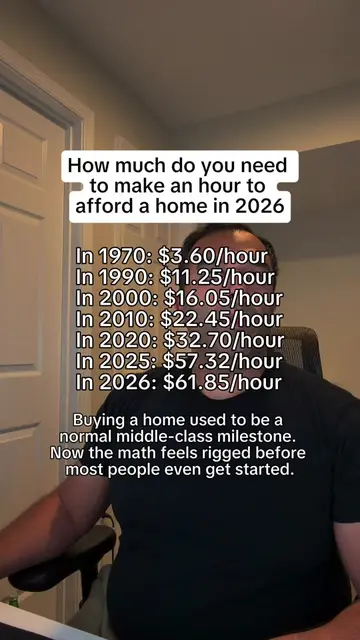
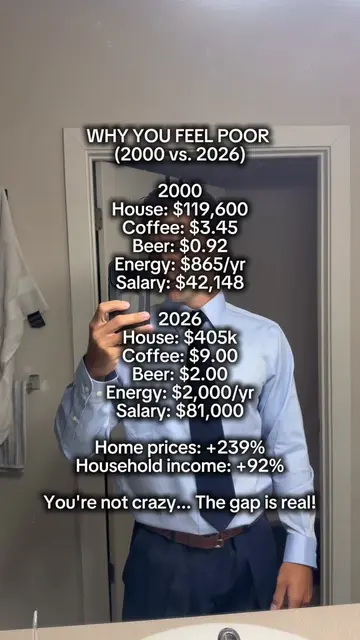
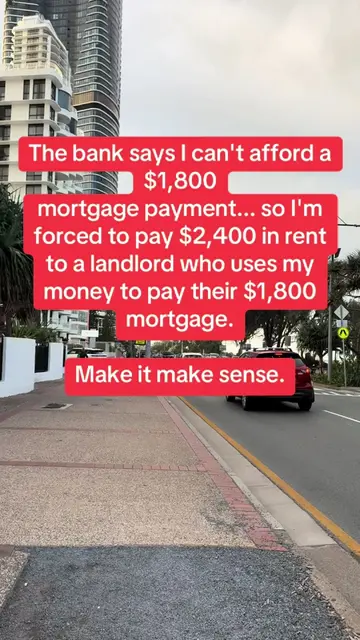
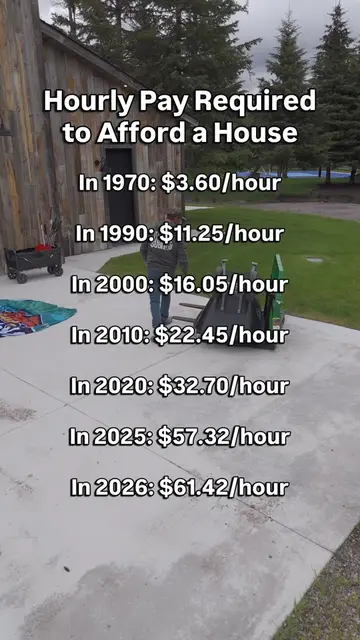
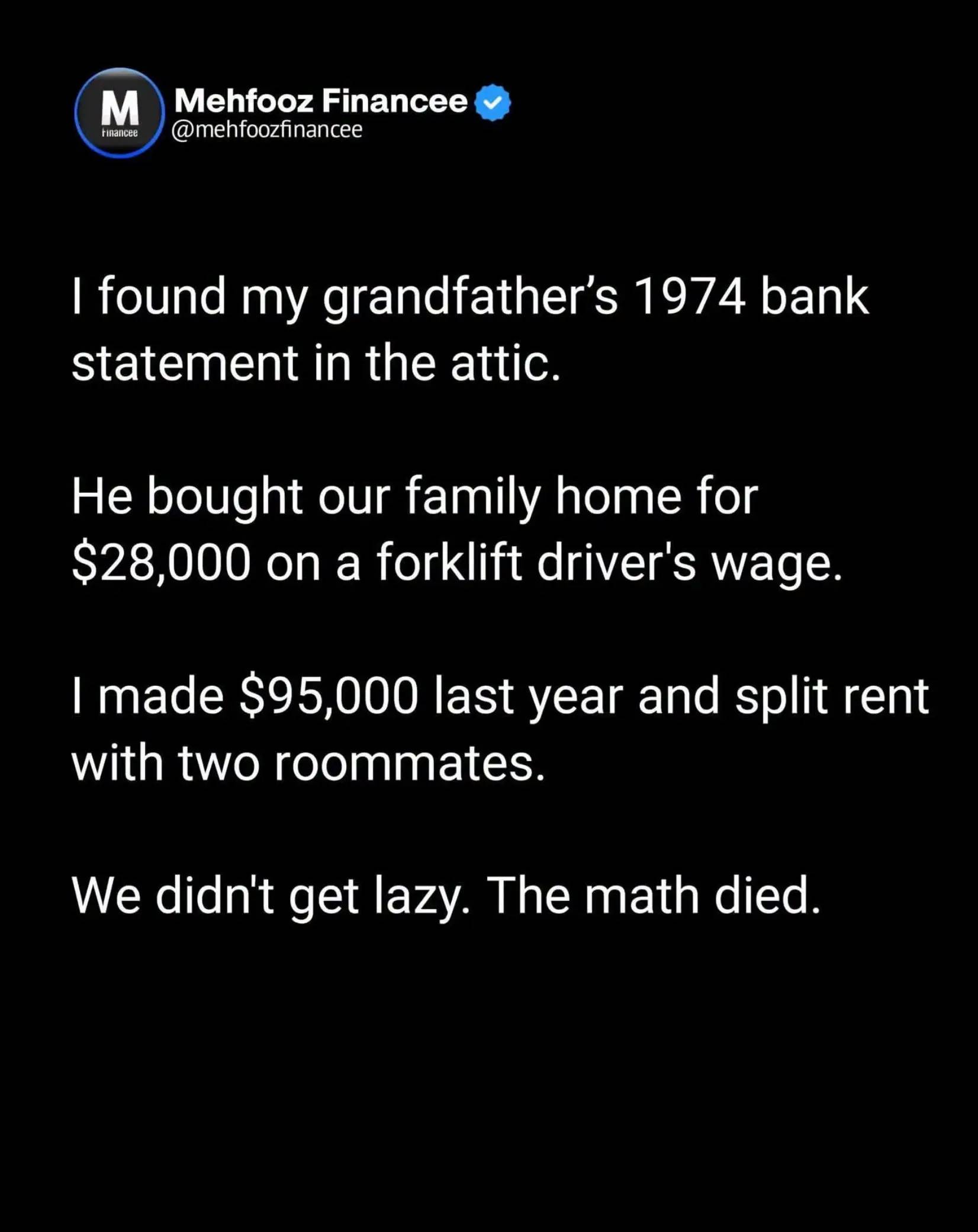
The post taps into a common sentiment of economic hardship and generational disparity, resonating with viewers who feel the current economic system is unfair or broken compared to the past.
What happens
The post contrasts the financial realities of past generations with the present. It highlights how a grandfather could afford a home on a forklift driver's wage in 1974, while today, even with a higher income, people struggle to afford housing and often share rent with roommates, attributing this to economic changes rather than laziness.
The breakdown
Original caption
A forklift driver buying a family home on one income wasn’t a miracle; it was the design of the economy. Making $95K and splitting rent with roommates isn’t a failure; it’s the result of a system that no longer works the way it used to. 1. Housing prices grew 8–12× faster than wages In 1974, median home price: $38,000, Median wage: $11,100, and Home cost ≈ 3.4× annual salary Today, median home price: $420,000, Median wage: $59,000, and Home cost ≈ 7.1× annual salary. Even if you make $95K, homes cost 4–6× more relative to income than your grandfather faced. 2. Rent inflation massively outpaced income growth 1970s rent: $150–$250/mo. 2026 rent in most cities: $1,800–$3,000/mo Rent grew 10–12×. Wages grew 3–4×. That’s why you need roommates. It’s not personal — it’s arithmetic. 3. Interest rates flipped the entire affordability equation 1974 mortgage rates were high (8–9%), but homes were cheap, down payments were small, one income could qualify, Banks didn’t require today’s credit standards, and you could buy a home with a blue‑collar job. Today: homes are expensive, down payments are massive, mortgage rates have doubled, lending standards have tightened, and you need two incomes or high earnings to qualify. 4. Housing was built for families — now it’s built for investors 1974: Homes were built to be lived in, Zoning allowed starter homes, Land was cheap, Investors weren’t buying houses, and Corporations didn’t own neighborhoods 2026: Investors buy 20–30% of starter homes, Corporations own entire subdivisions, Zoning blocks affordable housing, Land is expensive, and New homes are luxury‑priced. 5. Cost of living exploded in every category 1974 vs. today: College: +1,200%, Healthcare: +600%, Childcare: +300%, Cars: +200%, Food: +150%, and Housing: +500–1,000% Wages? +40–60%. 6. The emotional part: people think the past was “normal” It wasn’t. It was a unique economic window: Post‑war boom, Strong unions, Cheap land, Low population density, High wages for manual labor, Minimal corporate housing ownership, and Government investment in middle‑class stability.