On-screen text
APPLIED AI
IS AN EMERGING FIELD THAT IS GOING TO GET WAY MORE POPULAR IN THE NEXT FEW YEARS.
AND I WAS ABLE TO GET A JOB IN IT
AND I DOUBLED MY INCOME BY GETTING A JOB IN IT.
SO I'M GONNA GO INTO WHAT
APPLIED A.I.
EVEN IS
AND WHAT I THINK
HOW I THINK I GOT THAT JOB
AND KIND OF THE DIFFERENTIATORS.
SO APPLIED A.I. IS BASICALLY JUST APPLYING A.I.
TO BUSINESS PRACTICES,
AND IN A WAY THAT'S GOING TO ACTUALLY MAKE AN IMPACT.
THERE'S A HUGE GAP
IN ALL OF THE
A.I. CAPABILITIES THAT ARE COMING OUT,
AND THEN LIKE
BUSINESS PROCESSES THAT ARE LAGGING BEHIND.
BUSINESSES ARE SO OVERWHELMED
AND THEY DO NOT KNOW HOW TO APPLY THIS IN A MEANINGFUL WAY.
BOOM. CUE YOU.
UM, SO I NOW WORK AT AN
MARKETING AND TECHNOLOGY AGENCY
AND I'M A DIRECTOR OF
APPLIED A.I. MEDIA
AND HOW I THINK I GOT THIS JOB IS BOTH EXPERIENCE
AND I'M NOT TECHNICAL
BY THE WAY, SO I DON'T HAVE A
TECHNICAL
TRADITIONAL BACKGROUND,
BUT I DO
I CREATED EXPERIENCE FOR MYSELF WITHIN A.I.
AND THEN ALSO
SPECIALIZATION.
AND I'LL GO INTO KIND OF
BOTH OF WHAT I'M MEANING BY THOSE
AND SOME DETAILS, CAVEATS, PITFALLS TO AVOID.
SO WHEN IT COMES TO EXPERIENCE,
WHEN CHAT G P T FIRST CAME OUT,
I ALWAYS KIND OF BEEN LIKE
A SYSTEMS PERSON, BUT MY BACKGROUND IS MARKETING
AND WHEN IT FIRST CAME OUT,
I JUST WAS SO ENGULFED AND INTERESTED IN IT
THAT I JUST STARTED USING IT AS MUCH AS I COULD.
I STARTED LOOKING UP AND LIKE
MAKING AUTOMATIONS, AND I WAS PERSONALLY SO INTERESTED
IN IT. AND THEN I WAS ON MATERNITY LEAVE AT THE TIME,
KIND OF ASSUMING THE WHOLE WORLD WAS INTO IT,
UM, ENDS UP NOT REALLY.
AND SO I WENT BACK TO MY AGENCY AT THAT TIME,
AND THEY WEREN'T USING IT VERY MUCH.
AND WHICH WAS SHOCKING.
AND I STILL LOOK AROUND AT THE WORLD NOW
AND PEOPLE REALLY AREN'T USING IT THAT MUCH,
WHICH IS CRAZY, UM,
I THINK. AND SO I JUST
STARTED SEEING SUCH A GAP.
AND SO THERE WAS A LOT OF
HESITATION WITH MY AGENCY AT THAT TIME ABOUT USING A.I.
FAIR ENOUGH,
WE DID A LOT OF WORK WITH FINANCIAL SERVICES, SO
YOU KNOW, VERY CAUTIOUS FIELD,
UM, SO I STARTED DOING
CONSULTING ON THE SIDE
WHERE I WOULD JUST,
YOU KNOW, SOME OF IT WAS INFORMAL,
AND THEN IT BECAME MORE FORMAL.
OF JUST TEACHING FOLKS HOW TO USE IT,
SHOWING THEM HOW I USED IT,
BUILDING SOME SLIGHT AUTOMATIONS.
AND THEN I WAS ALWAYS TOOTING THE HORN TO MY
THE OWNER OF THAT AGENCY I WAS WORKING WITH AT THE TIME
ABOUT THE IMPORTANCE OF A.I.,
MY VISION FOR IT. I BASICALLY TOLD HIM, LIKE,
THIS IS MY ROLE, THAT I IMAGINE HAVING
UM, AND HE SAID
GO FOR IT. AND SO HE STARTED
HE LET ME LEAD AN INITIATIVE CALLED THE, UM,
A.I. DISCOVERY LAB IN WHICH
TESTED TOOLS.
IT WAS AMAZING EXPERIENCE
BECAUSE IT HELPED ME KINDA
BUILD IN FORMALIZING THE WAY WE LOOKED AT TOOLS,
FRAMEWORKS. UM,
I WAS TALKING TO CLIENTS A TON ABOUT A.I.
GRANTED, I MADE A LOT OF DECKS AND STRATEGIES,
NO ONE REALLY EVER DID ANYTHING WITH IT CAUSE THEY WERE TOO SCARED
AND PROCUREMENT WAS A NIGHTMARE.
BUT THE EXPERIENCE OF IT
AND JUST THE BEING ABLE TO TRY IT WAS SO HELPFUL.
AND GETTING THAT PRACTICE OF, OKAY,
WHAT'S THE BEST WAY TO LOOK AT,
YOU KNOW, WHAT ARE YOUR CURRENT BUSINESS PRACTICE PRACTICES?
HOW DO I THINK ABOUT,
YOU KNOW, A WAY TO SEE WHAT WOULD BE MOST IMPACTFUL?
THAT TYPE OF THINKING. SO THAT WAS
THAT WAS THE EXPERIENCE ASPECT OF IT.
AND THEN ON THE OTHER SIDE OF SPECIALIZATION IS,
I WANNA BE HONEST WITH YOU,
I'M KIND OF ALLERGIC TO THAT WORD
JUST BECAUSE I'M INTERESTED IN SO MANY THINGS
AND THE IDEA OF NICHING DOWN
LIKE ALWAYS SOUNDS
FEELS VERY LIMITING,
BUT IT'S
IT'S YOUR TICKET IN. THAT'S MY CONCLUSION.
SO HOW I GOT THIS JOB IS
THERE WAS A
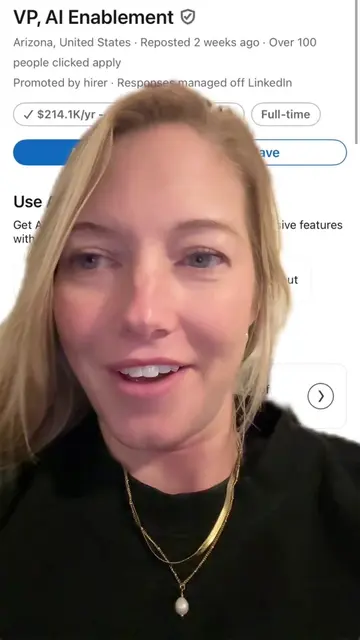
IT WAS JUST ON LINKEDIN
AND I DID A STRAIGHT UP EASY APPLY
BY THE WAY, ON IT BECAUSE
THEY NEEDED SOMEONE THAT IS REALLY GOOD ABOUT
CREATING A.I. SOLUTIONS
NEEDING, YOU KNOW, BASICALLY LIKE KNOWING A.I.
AND BEING GOOD AT IT. I WAS LIKE CHECK ME.
BUT THEN THEY ALSO NEEDED SOMEONE THAT HAD AN EXPERIENCE IN PAID MEDIA,
AND THAT'S BASICALLY ADVERTISING ONLINE.
AND MAYBE FIVE YEARS PRIOR
THAT WAS MY JOB. AND IT WAS, LIKE,
SUCH A HORRIBLE JOB. IT WAS
SO OVERWHELMING. AND AT THE TIME
AND SO STRESSFUL BECAUSE THERE'S SO MUCH MONEY ON THE LINE.
BUT I LEARNED IT. I LEARNED HOW TO DO IT.
I ENDED UP GOING TO A DIFFERENT MARKETING AGENCY,
WE DID A COMPLETELY DIFFERENT TYPE OF MARKETING CALLED CONTENT MARKETING.
BUT I DO KNOW PAID MEDIA.
AND SO I WAS LIKE, WELL,
I DO HAVE EXPERIENCE IN PAID MEDIA.
AND SO. AND SO EVERYTHING
ON THAT LINKEDIN JOB APPLICATION, LIKE IT JUST WAS ALL ME.
AND SO I JUST. I WAS LIKE, YEP.
I'LL JUST APPLY.
AND THEN BECAUSE I'M IN CALIFORNIA
IT SHOWS THE SALARY RANGE
AND I WAS LIKE, HOLY SHIT,
THIS IS. IT FELT VERY LIKE
I WAS DEFINITELY FEELING THAT IMPOSTER SYNDROME,
BUT I WAS LIKE, WELL, I
EVERYTHING THEY'RE LISTING I COULD DO,
AND I WOULD THINK I WOULD DO A REALLY GOOD JOB.
THERE'S A WHOLE LONG STORY OF, LIKE,
HOW MANY INTERVIEWS? AND I WAS PREGNANT AT THE TIME WHEN I APPLIED,
SO THAT WAS ITS OWN THING.
BUT CUT TO LIKE
NINE ROUNDS OF INTERVIEWS LATER,
I GOT THE JOB.
AND I TRULY THINK IT'S BECAUSE IT WAS SO HARD FOR THEM TO FIND SOMEONE
THAT KNOWS A.I. BUT ALSO HAS THAT PAID MEDIA EXPERIENCE.
SO THAT HOW THAT TRANSLATES TO YOU IS
ALRIGHT,
YOU KNOW, YOU KNOW A.I., YOU'RE A FIGURED OUT PERSON.
LET'S BE HONEST, YOU COULD PROBABLY DO THIS FOR ANY INDUSTRY
BECAUSE YOU'RE JUST A BRIGHT PERSON.
HOWEVER, SHOWING THAT YOU UNDERSTAND THE LANGUAGE
OR HOW A CERTAIN INDUSTRY MOVES
OR JUST KNOWING THE JARGON,
THAT IS THAT
DIFFERENTIATOR WILL ABSOLUTELY BE SO HELPFUL FOR YOU.
SO JUST IDENTIFYING, OKAY,
WHERE, WHAT INDUSTRY IS IT,
I DON'T KNOW, MAYBE WITH IT'S WITHIN LAW OR MAYBE
IT'S IN HEALTHCARE OR IT'S A CERTAIN TYPE OF LIKE, I DON'T KNOW,
PROCUREMENT THAT YOU'RE GOOD AT, WHATEVER IT IS, JUST
LIKE MAKE THAT YOUR STORY.
AND SO IT'S LIKE I DO A.I.
AND I'M GOOD AT THIS. I UNDERSTAND THIS INDUSTRY.
I'M THE PERSON FOR YOU. AND I THINK THAT IS THE TRICK IS WHERE, YOU KNOW,
H.R. IS LOOKING AND THEY'RE JUST LIKE, OH,
THAT'S MY PERSON.