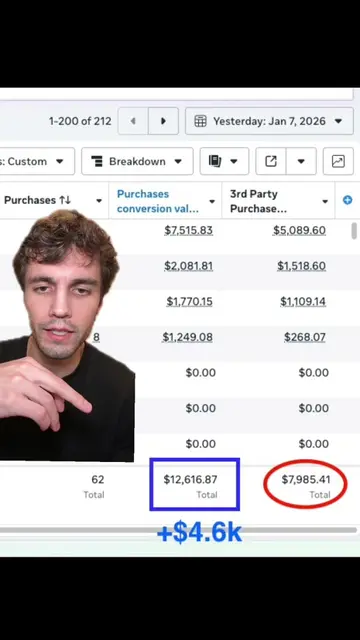
The video provides actionable advice and concrete examples of how successful e-commerce brands leverage data to improve their ad campaigns. By highlighting specific strategies and their impact on revenue and customer acquisition, it offers valuable insights that resonate with its target audience of e-commerce business owners and marketers.
Summary
The video explains three key data strategies used by successful e-commerce brands on Shopify to improve their advertising performance. These include accurately tracking ad revenue by using server-side tracking instead of the default Meta channel app, precisely calculating the cost of acquiring new customers by filtering out past purchasers, and tracking micro-events like adding items to a cart or signing up for emails to better understand user behavior and retarget effectively.
Structure
1Introduction: The future of e-commerce relies on data.
2Point 1: Accurate revenue tracking is crucial; avoid Meta's channel app for better data.
Original caption
This took forever to put together lmk if you have any questions or want to try the software we built that solves all 3 of these #metaads #shopify #ecommerce #dropshipping #mediabuyer
More from @firstpartyjacob
More breakout videos from this creator.
3
Example 1: A brand underestimated its Meta ad revenue by 50% due to inaccurate tracking.
4Example 2: Another brand underestimated its customer acquisition by 33% due to poor tracking.
5Point 2: Know your true New Customer Acquisition Cost (NCAC) by filtering out existing customers.
6Method: Use Shopify's data layer to track first-time purchasers.
7Benefit: Optimize ad spend for new customers and avoid targeting existing ones.
8Point 3: Track micro-events to understand user behavior and refine ad creatives/offers.
9Examples: Track '2+ items in cart', '$250+ cart', or 'email signups' to segment audiences and retarget effectively.
10Conclusion: Successful brands collect more data and use it strategically to increase revenue.
Product placement
The video promotes a SaaS product called FirstParty, which helps e-commerce businesses improve their data tracking and ad performance on platforms like Meta. The creator's bio link also leads to FirstParty's website.
On-screen text
The future of ecom is data
1. They send Meta 70% more customer data
I did a whole write up on this
I'm looking at them over here on my computer
This campaign was making $200k more than they thought
Now what do I mean when I say that?
I mean they know how to track conversions.
And what do I mean when I say that?
I mean none of them use
the Facebook and Instagram channel app
in Shopify
to connect their pixel and track conversions.
I must have made 100 videos
on that app at this point.
It misses a ton of purchases
that your ads are driving
because it uses third party cookies.
How it works
Which means two things
1. You don't know how your ads
actually perform
and which ones drive the most revenue,
which means it's harder for you to scale up.
And 2. Facebook doesn't know which ads
actually drive the most sales,
so it's harder for them
to find you more customers at a cheap price
because you're only sending them
like half your customer data.
Two quick examples
This brand thought they were making
around 400k a month for meta ads
when it was actually 600k,
which is 50% more.
And this brand thought
they were getting
around 2,000 customers a month for meta
when it was 3,000 customers.
Neither of them were scaling their spend
before they had their data
because why would they?
They thought their ads
were doing
50% worse than they were.
And that was entirely due to the fact that
they were using the channel app
which was informing their entire perspective
on what was actually
making their business money.
Literally the month after
they got off that app
and started using our tracking,
any server side tracking,
they spent an extra 75k on ads
because now they knew Meta worked
and they obviously made way more money.
So that was number one.
Sorry it was so long.
That's just the most impactful
and it's also what my business does.
But I've got two more.
2. They know true NCAC
(new customer cost)
Number two being
all these businesses,
all these big brands know
their real cost to acquire a new customer.
So the biggest ecom brands we work with
are obsessed with one metric
and it's NCAC,
it's new customer acquisition cost.
How do we get new customers
and how much does it cost to acquire them?
So we can do the math on
how much money we can make on them
over the course of their lifetime.
You don't wanna keep
wasting your ad budget
on existing customers
you already paid to acquire.
So how do you only spend
your ad budget
on getting new customers?
Well in the past within
meta ads
you would do this
by excluding an audience of past purchasers
from your ad campaigns
so that you only went after
new people
and none of the people
on that audience list.
This is cuz by default
Meta Ads doesn't care
if your customers are first time are returning.
They just wanna get you customers
so you keep paying them. Right?
Well, we've started to notice that
the big brands we work with on Shopify
are doing something different
which is filtering for new customers
at the Shopify data layer
level.
What do I mean when I say this?
Well Shopify has some functionality where
whenever a purchase is fired
and the purchase event
goes to the data layer.
I know this is technical.
You can add a trigger condition
that basically only fires a purchase event
if that customer
has never been detected
in your Shopify customer base.
What that really means is
you can send custom events back to meta ads
that only report the amount of new
first time purchasers
that a certain campaign is driving.
So if I were to say that like a human,
which I should have the first time,
basically you can figure out
which ad campaigns
actually drive new customers
and that is determined by
Shopify.
So it's using a reliable
customer database
to Determine if it's a first time
or returning customer.
Then you can make the choice as a brand
if you wanna use that to
optimize only for new purchasers.
Or if you just wanna have it
as a metric next to your
existing purchase event
to see which campaigns
are creating new business for you.
3. They track micro events
to change creative + offer
Last one. Almost done.
No. 3. These big brands,
the ones making over $5 million a month,
just know way more
about their users
than you know about yours.
So all the big nine figure brands we work with
don't just track the
seven standard ecom events in meta
like page view, view content,
add to cart, blah blah blah.
They set up a bunch of custom events.
Kind of like the first time
purchase event.
So they can see whatever they want
on any page of the website
about any kind of behaviour
that their users are doing,
like the ones I'm showing
in the screenshots here.
So they know exactly where
customers are falling off
and how to retarget them
with better ads.
This brand tracks whenever somebody
adds a second product to their cart
because now they have
a high average order value
if they can get them to convert.
This brand tracks anybody
who has a cart worth over $250
but still hasn't purchased yet,
so they can run a separate type of
retargeting ad to them.
And then there's other brands who just track things
like how many email signups
are we getting from ads
so that we can track the
cost per email signup
so we stop wasting money on ads
and just try to convert these people
through email later.
Ad algorithms are AI.
AI needs good data.
Feed Meta good data.
So if I had to sum this video up,
basically,
the fastest growing brands that we're working with on Shopify
are not just making better creative
they're collecting way more data
than everybody else,
and they're using it to make more money.
Transcript
The future of ecom is data. We track over $100 million of spend on Meta ads every month, and these are the three things. I did a whole write up on this. I'm looking at them over here on my computer that the biggest brands we work with, the ones doing over 5, 10, 20, 50 mill a month on Shopify, are all doing with their data that the smaller brands we work with are not. So if you're under 5 mill a month, this is some advice for you. Number one, all of them know how much revenue their ads actually drive. Now what do I mean when I say that? I mean they know how to track conversions. And what do I mean when I say that? I mean none of them use the Facebook and Instagram channel app in Shopify to connect their pixel and track conversions. I must have made 100 videos on that app at this point. But long story short, it misses a ton of purchases that your ads are driving because it uses third party cookies. How it works. Which means two things. One, you don't know how your ads actually perform and which ones drive the most revenue, which means it's harder for you to scale up. And two, Facebook doesn't know which ads actually drive the most sales, so it's harder for them to find you more customers at a cheap price because you're only sending them like half your customer data. Two quick examples. This brand thought they were making around 400k a month for Meta ads when it was actually 600k, which is 50% more. And this brand thought they were getting around 2,000 customers a month for Meta when it was 3,000 customers. Neither of them were scaling their spend before they had their data because why would they? They thought their ads were doing 50% worse than they were. And that was entirely due to the fact that they were using the channel app, which was informing their entire perspective on what was actually making their business money. Literally the month after they got off that app and started using our tracking, any server side tracking, they spent an extra 75k on ads because now they knew Meta worked and they obviously made way more money. So that was number one. Sorry it was so long. That's just the most impactful and it's also what my business does. But I've got two more. Number two being, all these businesses, all these big ass brands know their real cost to acquire a new customer. So the biggest ecom brands we work with are obsessed with one metric and it's NCAC, it's new customer acquisition cost. How do we get new customers and how much does it cost to acquire them? So we can do the math on how much money we can make on them over the course of their lifetime. You don't wanna keep wasting your ad budget on existing customers you already paid to acquire. So how do you only spend your ad budget on getting new customers? Well, in the past within Meta ads, you would do this by excluding an audience of past purchasers from your ad campaigns so that you only went after new people and none of the people on that audience list. This is cuz by default Meta Ads doesn't care if your customers are first time or returning. They just wanna get you customers so you keep paying them. Right? Well, we've started to notice that the big brands we work with on Shopify are doing something different, which is filtering for new customers at the Shopify data layer level. What do I mean when I say this? Well, Shopify has some functionality where whenever a purchase is fired and the purchase event goes to the data layer. I know this is technical. You can add a trigger condition that basically only fires a purchase event if that customer has never been detected in your Shopify customer base. What that really means is you can send custom events back to Meta ads that only report the amount of new first time purchasers that a certain campaign is driving. So if I were to say that like a human, which I should have the first time, basically you can figure out which ad campaigns actually drive new customers and that is determined by Shopify. So it's using a reliable customer database to determine if it's a first time or returning customer. And then you can make the choice as a brand if you wanna use that to optimize only for new purchasers. Or if you just wanna have it as a metric next to your existing purchase event to see which campaigns are creating new business for you. Last one. Almost done. No. 3. These big brands, the ones making over $5 million a month, just know way more about their users than you know about yours. So all the big nine figure brands we work with don't just track the seven standard ecom events in Meta like page view, view content, add to cart, blah blah blah. They set up a bunch of custom events. Kind of like the first time purchase event. So they can see whatever they want on any page of the website about any kind of behavior that their users are doing, like the ones I'm showing in the screenshots here. So they know exactly where customers are falling off and how to retarget them with better ads. This brand tracks whenever somebody adds a second product to their cart because now they have a high average order value if they can get them to convert. This brand tracks anybody who has a cart worth over $250 but still hasn't purchased yet, so they can run a separate type of retargeting ad to them. And then there's other brands who just track things like how many email signups are we getting from ads so that we can track the cost per email signup so we stop wasting money on ads and just try to convert these people through email later. So if I had to sum this video up, basically, the fastest growing brands that we're working with on Shopify are not just making better creative, they're collecting way more data than everybody else, and they're using it to make more money.

 16 videos