Loading video…
All breakouts
5.7Text-HeavyPOV / Skit hookEducation
Hook
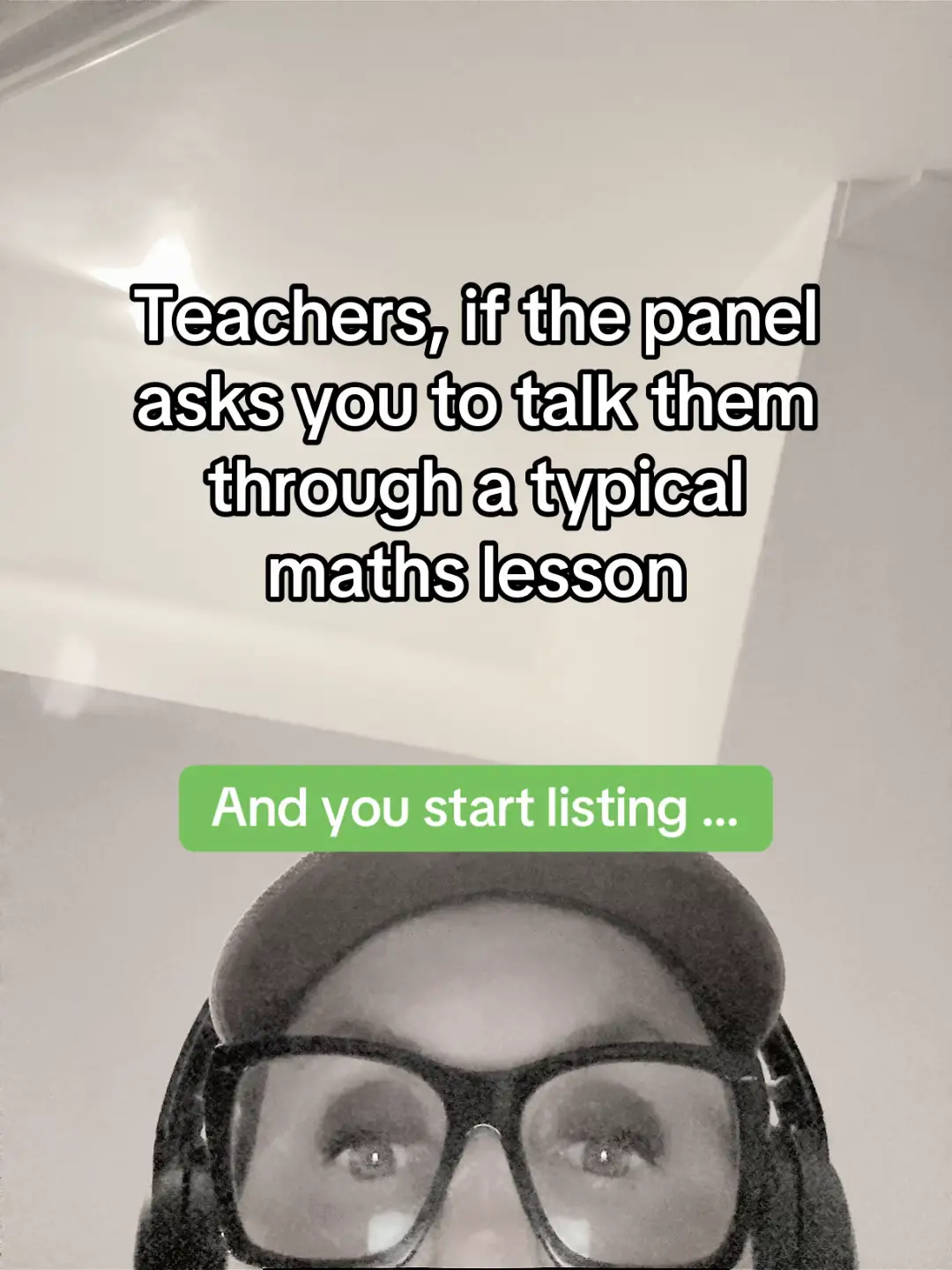
Teachers, if the panel asks you to talk them through a typical maths lesson
@teacher.careers
4.1K followers · usually 779 views a post
Views
2.6K
Likes
52
Comments
1
Shares
5
Promoted product
Teacher Career Talkhttps://stan.store/teachercareertalk ↗
Why it worked
The video provides actionable advice and a clear, structured framework for a common pain point for teachers (interview preparation). The use of specific examples and the emphasis on evidence-based responses makes the content highly valuable and shareable within the target audience.
Summary
This video provides teachers with a framework for discussing their instructional decision-making during math lessons in an interview setting. It outlines three key frameworks: Intentional Planning, Explicit Mathematics Instruction, and Mathematical Thinking & Responsive Differentiation, offering specific examples of strong responses.
Structure
- 1Introduction: The common mistake of listing programs instead of teaching methods.
- 2Framework 1: Intentional Planning - focusing on assessment data, misconceptions, and understanding.
- 3Framework 2: Explicit Mathematics Instruction - detailing teaching practices like modeling and guided practice.
- 4Framework 3: Mathematical Thinking & Responsive Differentiation - addressing misconceptions and tailoring instruction.
- 5Impact: Demonstrating the effectiveness of the approach with evidence.
Original caption
One of the biggest mistakes I hear in teacher interviews? Candidates spend two minutes explaining the maths program their school uses… …instead of explaining their teaching. Interview panels already know schools use different resources. They aren’t assessing whether you can name a program. They’re assessing whether you understand how students learn mathematics. A strong response explains: 💚 how you identify learning needs through assessment 💚 how you plan intentionally 💚 how you explicitly teach new mathematical concepts 💚 how you check for understanding throughout the lesson 💚 how you respond to misconceptions in real time 💚 how you differentiate support and extension 💚 and finally… the impact your teaching has on student learning. That’s the difference between describing a lesson… …and demonstrating your instructional expertise. 💾 Save this before your next interview. #teaching #maths #teachersoftiktok #teacherjobs #teacherinterviews
More from @teacher.careers
More breakout videos from this creator.