Loading video…
All breakouts
97.3Talking HeadOther hookEducation
Hook
@pegasusphysio
@pegasusphysio
13.2K followers · usually 1.6K views a post
Views
162.0K
Likes
6.0K
Comments
95
Shares
152
Why it worked
The video uses a common problem for riders (swinging leg) and presents a clear visual comparison of two methods for weight transfer, prompting engagement through a question and a clear demonstration.
Summary
The video demonstrates two ways a rider might transfer weight into their stirrups while in a rising trot. It questions whether the rider has a swinging leg and shows two different methods of weight transfer, implying one is correct and the other is not.
Structure
- 1Introduction of the problem: swinging leg in rising trot
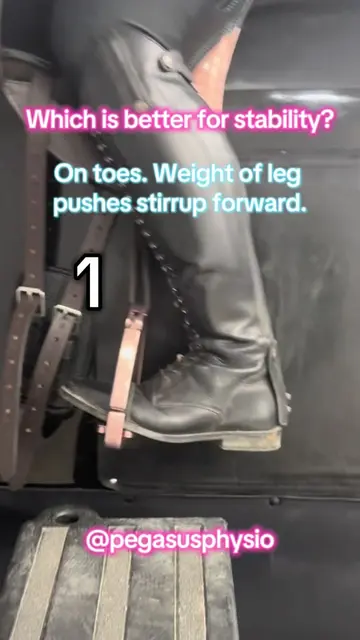
- 2Demonstration of incorrect weight transfer
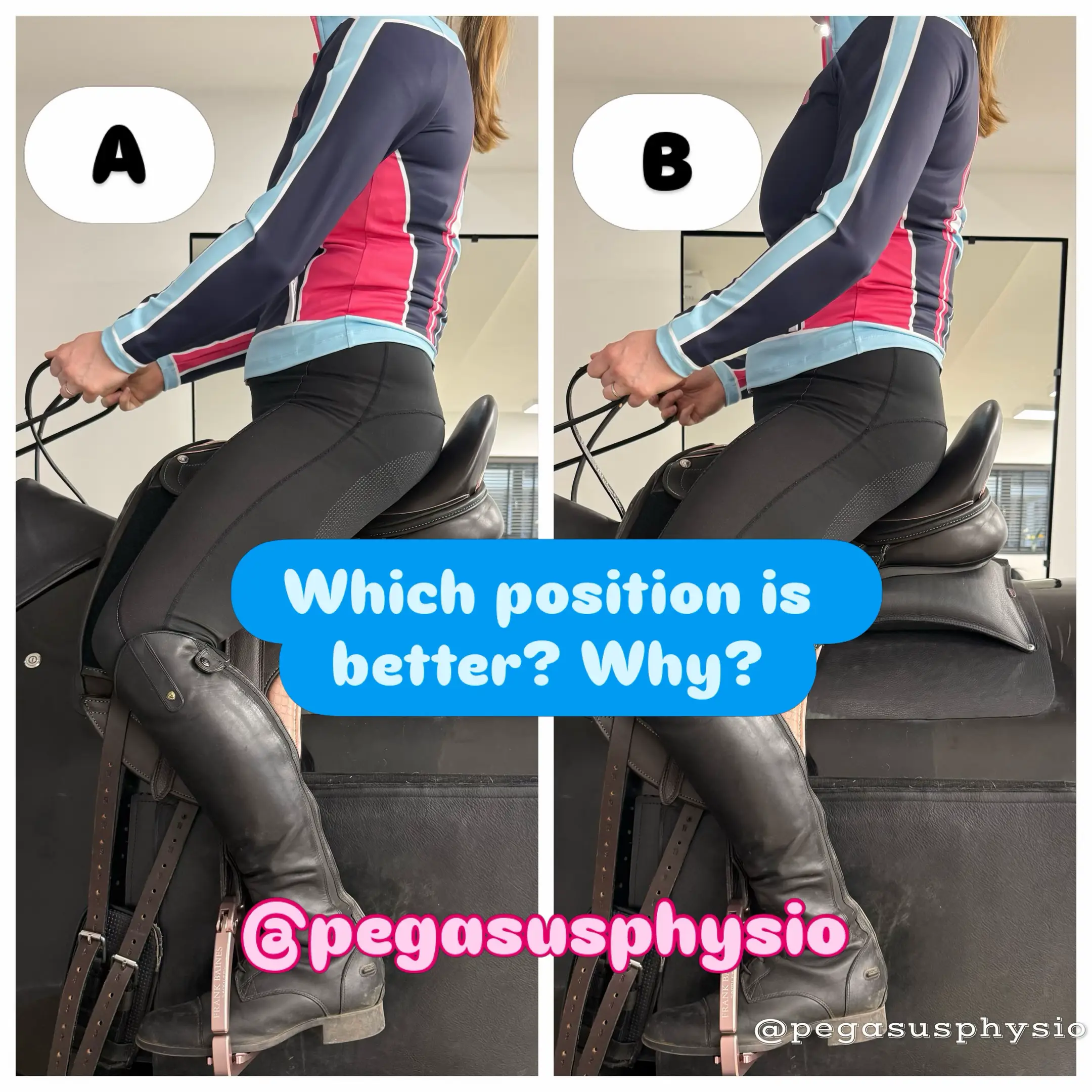
- 3Demonstration of correct weight transfer
On-screen text
@pegasusphysio
Do you have a swinging leg in rising trot?
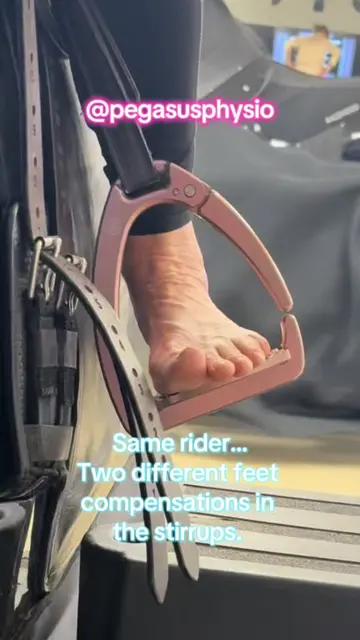
Do you transfer weight into your stirrups like this?
Or this?
Original caption
🙌One of the quickest ways to tell whether a rider really understands how to use their stirrups is to ask them to stand up in them. Within seconds, you’ll see whether they’re balanced over the stirrups, can transfer the majority of their body weight into them and maintain a stable lower leg. If a rider stands by driving their heels down, straightening their knees and pushing down into the stirrups, the lower leg often starts to swing. It doesn’t matter whether they’re standing still, riding in rising trot or cantering. The mechanics are the same. The only way to stop that swinging lower leg is usually to brace against it by gripping with the knees or clamping the leg against the horse. The leg may look quieter, but it’s only because it’s being held there. Now try something different. Transfer your weight onto the ball of your foot on a level, stable stirrup. Rather than locking the leg, the muscles at the front and back of the lower leg co-contract, while the muscles within the foot provide a stable platform for the rest of the body. Instead of hanging from the stirrup, you’re balanced over it. Importantly, this isn’t the same as pushing down into your stirrups. Just as you don’t consciously push into the floor when you stand up from a chair, you don’t need to push into the stirrups. You’re simply transferring your body weight from one base of support to another and allowing your body to organise itself over that new base. The result is a lower leg that is both stable and able to move with the horse, rather than one that’s either swinging freely or being held rigidly in place. Understanding how to transfer your weight into the stirrups changes everything. Once the forces are passing efficiently through your feet, many of the “faults” riders spend years trying to correct become much easier to solve. This isn’t about relying on your stirrups. It’s about understanding how your body interacts with them and learning to use them in a way that helps, rather than hinders, your position. The Riding Ready Position Course and Rider Physio sessions explores the physics, anatomy and motor control behind a stable lower leg, so you can understand why good position happens rather than simply trying to copy what it looks like. #riderphysio #riderbiomechanics #ridingexplained #ridingready #horseriding
More from @pegasusphysio
More breakout videos from this creator.