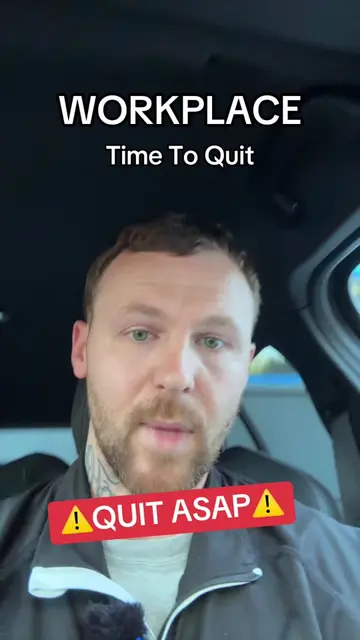
The video taps into a common workplace grievance about unpaid labor and provides concrete data and legal context to validate that grievance, making it highly relatable and shareable.
Summary
The video argues that employees are often not paid for preparation time before or after their official shifts, which is legally considered work in the UK. It highlights the significant amount of unpaid time employees give away over years and encourages viewers to know their rights and stop working for free.
Structure
1Introduction to the problem of unpaid work time.
2Explanation of UK working time regulations and a case study.
3The financial and time cost of unpaid work.
4Call to action to check YouTube for more information.
Original caption
STOP GOING IN EARLY AND WORKING FOR FREE #working #jobs #9to5 #fyp #workplace @Exitnine.ai
More from @aaron_knightley
More breakout videos from this creator.
5
Emphasis on the value of time over money and reclaiming it.
Product placement
Exitnine.ai: ACTS - it is a website that provides information about working time regulations and the cost of working for free. Removing it would change what happens in the video as it is the source of the data presented. It appears as a watermark on the graphic. Removing it would not change what happens in the video. YouTube: APPEARS - it is a platform where the creator hosts longer videos. Removing it would not change what happens in the video. Aaron Knightley: APPEARS - it is the creator's name and brand. Removing it would not change what happens in the video.
Call to action
Check out my YouTube channel where I discuss how 98.999% of employees are brainwashed into thinking they need to go in early and just work for free and waste their life. Link in bio.
On-screen text
WORKPLACE
STOP Going In Early
GET A BACKBONE ⚠️
Transcript
In the workplace, stop going in early and staying late unpaid because you don't have to. By law and by your contract, your job doesn't start until the time in that contract and when you swipe in. And you can do everything after that, getting ready, PPE, setting up. It starts after you clock in. And if you're someone who has to put on PPE or get ready in any type of way, well, check out this article. Working Time Regulations: Why You Must Be Paid for Preparation Time. For millions of UK workers, the day doesn't start when they swipe a badge. It starts the moment they pull on a uniform, boot up a work system, or load a company van. If your employer requires you to perform tasks before your official shift, you need to know your rights under the working time regulations. A recent government crackdown has made headlines by fining major retailers for failing to pay staff for this exact type of time. High Street giant Holland & Barrett was ordered to repay more than £153,000 to over 2,500 workers, proving that preparation time is legally considered work. Working Time Regulations: Why You Must Be Paid for Preparation Time. Because otherwise, you're just reducing your salary down to minimum wage. And also, who wants to work for free before or after their job? When you are paid, that is when you work. So when your employer says, well, being on time is actually late, it's nonsense. If that's when your contract says you start, that is when you start. And you should only go there when you are actually being paid. And if you want to hear a full breakdown, head on to my YouTube channel where I discuss how 98.999% of employees are brainwashed into thinking they need to go in early and just work for free and waste their life. Now, let's look at the numbers of how much time people are giving away. If you do 10 minutes before and 10 minutes after every shift, all unpaid. Over a year, that's 4,200 minutes, 70 hours, nearly 9 days a year over 42 working weeks. Over five years, 21,000 minutes, 350 hours, nearly 44 days. Over 10 years, 42,000 minutes, 700 hours, 87.5 days. If you give away 20 minutes for free every day over a year, that's 4,200 minutes, 70 hours, nearly 9 days a year. Over five years, 21,000 minutes, 350 hours, nearly 44 days. Over 10 years, 42,000 minutes, 700 hours, 87.5 days. You've been giving away 87.5 days for free that you should have been spending time with your loved ones, being at home, you know, pursuing passions, hobbies, working on yourself. As I always say, if you can spend 8 to 10 hours working for someone else, you should be spending at least three to four hours working on your dreams. So there we go. The numbers don't lie. So if you have an employer that says, well, being on time is actually late, tell them to go set on a stiff one and actually dig out some of these articles because they're all publicly available. You do have legal rights. Stop giving away the most precious asset and commodity that we have. We cannot buy it back, we cannot save it, we cannot invest it, we cannot make more time. Time is more important than money. Please stop giving it away for free.